
Syjonizm, krypto-judaizm i mistyfikacja biblijna
">Zionism, Crypto-Judaism, and the Biblical Hoax LAURENT GUYÉNOT • APRIL 8, 2019 t;">What’s a neocon, Dad?
“What’s a neocon?” clueless George W. Bush once asked his father in 2003. “Do you want names, or a description?” answered Bush 41. “Description.” “Well,” said 41, “I’ll give it to you in one word: Israel.” True or not, that exchange quoted by Andrew Cockburn[1] sums it up: the neoconservatives are crypto-Israelis. Their true loyalty goes to Israel — Israel as defined by their mentor Leo Strauss in his 1962 lecture “Why We Remain Jews,” that is, including an indispensable Diaspora.[2]
In his volume Cultural Insurrections, Kevin MacDonald has accurately described neoconservatism as “a complex interlocking professional and family network centered around Jewish publicists and organizers flexibly deployed to recruit the sympathies of both Jews and non-Jews in harnessing the wealth and power of the United States in the service of Israel.”[3] The proof of the neocons’ crypto-Israelism is their U.S. foreign policy:
“The confluence of their interests as Jews in promoting the policies of the Israeli right wing and their construction of American interests allows them to submerge or even deny the relevance of their Jewish identity while posing as American patriots. […] Indeed, since neoconservative Zionism of the Likud Party variety is well known for promoting a confrontation between the United States and the entire Muslim world, their policy recommendations best fit a pattern of loyalty to their ethnic group, not to America.”[4]
"> Syjonizm, krypto-judaizm i mistyfikacja biblijna LAURENT GUYÉNOT • 8 KWIETNIA 2019 t;"> Co to jest neokon, tato?
„Co to jest neokon?” nieświadomy George W. Bush zapytał kiedyś swojego ojca w 2003 roku. „Chcesz nazwiska lub opisu?” odpowiedział Bush 41. „Opis”. „Cóż”, powiedział 41, „dam ci to jednym słowem: Izrael”. Prawda czy nie, ta wymiana cytowana przez Andrew Cockburn [1] podsumowuje: neokonserwatyści są krypto-Izraelczykami. Ich prawdziwa lojalność przypada Izraelowi - Izraelowi, zgodnie z definicją ich mentora Leo Straussa w jego wykładzie z 1962 r. „Dlaczego mamy pozostać Żydami”, to znaczy, w tym niezbędnej diaspory [2].
W swoim tomie Insurekcje kulturalne Kevin MacDonald dokładnie opisał neokonserwatyzm jako „złożoną, powiązaną sieć zawodową i rodzinną skupioną wokół żydowskich publicystów i organizatorów elastycznie rozmieszczonych w celu rekrutacji sympatii zarówno Żydów, jak i nie-Żydów, w celu wykorzystania bogactwa i potęgi Stanów Zjednoczonych w służbie dla Izraela. ”[3] Dowodem krypto-izraelizmu neokonów jest ich polityka zagraniczna USA:
„Połączenie ich interesów jako Żydów w promowaniu polityki izraelskiej prawicy i ich konstrukcji interesów amerykańskich pozwala im zatuszować, a nawet zaprzeczyć, jak ważna jest ich żydowska tożsamość, udając amerykańskich patriotów. […] Rzeczywiście, ponieważ neokonserwatywny syjonizm odmiany Partii Likud jest dobrze znany z promowania konfrontacji między Stanami Zjednoczonymi a całym światem muzułmańskim, ich zalecenia dotyczące polityki najlepiej pasują do wzorca lojalności wobec ich grup etnicznych, a nie Ameryki. ”[ 4]
Polityka zagraniczna neokonów w USA zawsze pokrywała się z najlepszym interesem Izraela. Przed 1967 r. Zainteresowanie Izraela polegało głównie na imigracji Żydów z Europy Wschodniej. Od 1967 r., Kiedy Moskwa zakończyła emigrację Żydów, aby zaprotestować przeciwko aneksji terytoriów arabskich przez Izrael, zainteresowanie Izraela obejmowało zwycięstwo USA w zimnej wojnie. Właśnie wtedy redakcja „ Commentary”, miesięcznika American Jewish Committee, przeszła na „neokonserwatyzm”, a komentarz stał się, jak mówi Benjamin Balint, „kontrowersyjnym magazynem, który przekształcił żydowską lewicę w neokonserwatywną prawicę. .”[5] Irving Kristol wyjaśnił Kongresowi Żydów Amerykańskich w 1973 r., Dlaczego aktywizm antywojenny nie był już dobry dla Izraela:„ W interesie Żydów jest teraz posiadanie dużego i potężnego establishmentu wojskowego w Stanach Zjednoczonych. […] Amerykańscy Żydzi, którym zależy na przetrwaniu państwa Izrael, muszą powiedzieć: nie, nie chcemy zmniejszać budżetu wojskowego, ważne jest utrzymanie dużego budżetu wojskowego, abyśmy mogli bronić Izraela ”. [6] To mówi nam, do której „rzeczywistości” miał na myśli Kristol, kiedy słynie zdefiniował neokonserwatystę jako „liberała, który został okradziony przez rzeczywistość” ( Neoconservatism: Autobiography of a Idea, 1995).
Wraz z końcem zimnej wojny interes narodowy Izraela ponownie się zmienił. Głównym celem stało się zniszczenie wrogów Izraela na Bliskim Wschodzie poprzez wciągnięcie Stanów Zjednoczonych w trzecią wojnę światową. Neokonserwatyści przeszli drugą konwersję, od antykomunistycznych zimnych wojowników do islamofobicznych „Clashers of Civilizations” i krzyżowców w „War Terror”.
We wrześniu 2001 r. Otrzymali „New Pearl Harbor”, o którym marzyli w raporcie PNAC rok wcześniej. [7] Dick Cheney przedstawił dwa tuziny neokonserwatystów na kluczowych stanowiskach, w tym Richarda Perle, Paula Wolfowitza i Douglasa Feitha w Pentagonie, Davida Wurmsera w Departamencie Stanu oraz Philipa Zelikowa i Elliotta Abramsa w Radzie Bezpieczeństwa Narodowego. Abrams napisał trzy lata wcześniej, że Żydzi diaspory „mają się wyróżniać od narodu, w którym żyją. Naturą bycia Żydem jest rozłąka - z wyjątkiem Izraela - z resztą populacji. ”[8] Perle, Feith i Wurmser podpisali w 1996 r. Tajny izraelski raport zatytułowany A Clean Break: A New Strategy za zabezpieczenie królestwa, wzywając premiera Benjamina Netanjahu do zerwania z porozumieniami z Oslo z 1993 r. i potwierdzenia prawa Izraela do pierwokupu na terytoriach arabskich. Argumentowali także za obaleniem Saddama Husseina jako „ważny izraelski cel strategiczny sam w sobie”. Jak zauważył słynny Patrick Buchanan, wojna w Iraku w 2003 r. Dowodzi, że plan „został narzucony przez Perle, Feith, Wurmser & Co. Stanom Zjednoczonym” [9].
Sposób, w jaki neokońscy artyści zdołali zmusić sekretarza stanu Colina Powella do poddania się, jest niejasny, ale według jego biografa Karen DeYoung Powell prywatnie walczył przeciwko temu „osobnemu rządowi” złożonemu z „Gestapo Wolfowitza, Libby, Feitha i Feitha” „.” [10] Jego szef sztabu, pułkownik Lawrence Wilkerson, oświadczył w PBS w 2006 r., Że „uczestniczył w mistyfikacji wobec narodu amerykańskiego, społeczności międzynarodowej i Rady Bezpieczeństwa Organizacji Narodów Zjednoczonych” [11], aw 2011 r. , otwarcie potępił dwulicowość neokonserwatystów, takich jak Wurmser i Feith, których uważał za „członków partii Likud niosących karty”. „Często zastanawiałem się” - powiedział - „czy ich głównym przywiązaniem była ich ojczyzna, czy Izrael”. [12] Coś nie do końca brzmi, gdy neokoni mówią „my Amerykanie”, na przykład Paul Wolfowitz: my, Amerykanie, mamy jeszcze jedną wspólną cechę z Izraelczykami. ”[13]
Zdolność neokonów do oszukiwania amerykańskiej opinii publicznej przez pozowanie na amerykańskich, a nie izraelskich patriotów wymagała, aby ich żydowskość była tabu, a Carl Bernstein, choć sam Żyd, wywołał skandal, powołując się w telewizji krajowej na odpowiedzialność „żydowskich neokonów” za Wojna w Iraku [14] Ale fakt, że zniszczenie Iraku zostało przeprowadzone w imieniu Izraela, jest obecnie powszechnie akceptowany, w szczególności dzięki książce Johna Mearsheimera i Stephena Walta z 2007 roku, lobby Izraela i amerykańskiej polityki zagranicznej . I nawet najlepsi kłamcy czasami się zdradzają. Philip Zelikow na krótko upuścił maskę podczas konferencji na University of Virginia w dniu 10 września 2002 r .:
„Dlaczego Irak miałby atakować Amerykę lub użyć przeciwko nam broni nuklearnej? Powiem wam, co myślę, że prawdziwe zagrożenie jest i jest od 1990 roku: jest to zagrożenie dla Izraela. I to jest zagrożenie, które nie odważy się wypowiedzieć swojej nazwy, ponieważ Europejczycy nie dbają głęboko o to zagrożenie, powiem szczerze. A rząd amerykański nie chce zbyt mocno się na nim retorycznie opierać, ponieważ nie jest to popularna sprzedaż. ”[15]
Od krypto-judaizmu do krypto-syjonizmu
Norman Podhoretz, redaktor naczelny komentarza (i teść Elliotta Abramsa), powiedział, że po czerwcu 1967 r. Izrael stał się „religią amerykańskich Żydów” [16]. rozpoczął pracę w. Ale naturalnie taka religia powinna pozostać dyskretna poza społecznością żydowską, jeśli to możliwe, nawet tajna i zamaskowana jako amerykański patriotyzm. Neokoni udoskonalili ten fałszywy amerykański patriotyzm całkowicie opłacalny dla Izraela i ostatecznie katastrofalny dla Amerykanów - pseudoamerykanizm, który jest tak naprawdę krypto-izraelizmem lub krypto-syjonizmem.
Ten quasi-religijny krypto-syjonizm jest porównywalny z krypto-judaizmem, który odegrał decydującą rolę w chrześcijaństwie w późnym średniowieczu. Od końca XIV wieku kazania, groźby wydalenia i oportunizm sprawiły, że ponad sto tysięcy Żydów nawróciło się na katolicyzm w Hiszpanii i Portugalii, z których wielu nadal potajemnie „judaizowało”. Uwolnieni od ograniczeń nałożonych na Żydów ci „nowi chrześcijanie”, zwani Conversos lub Marranos , doświadczyli gwałtownego wzrostu społeczno-gospodarczego. Według historyka marranizmu Yirmiyahu Yovela:
„ Konwersacje wpadły do chrześcijańskiego społeczeństwa i infiltrowały większość jego szczelin. Po jednym lub dwóch pokoleniach byli w radach Kastylii i Aragonii, pełniąc funkcje królewskich doradców i administratorów, dowodząc armią i marynarką wojenną oraz zajmując wszystkie urzędy kościelne od proboszcza do biskupa i kardynała. […] Konwersatorzy byli kapłanami i żołnierzami, politykami i profesorami, sędziami i teologami, pisarzami, poetami i doradcami prawnymi - i oczywiście, jak w przeszłości, lekarzami, księgowymi i wysoko postawionymi kupcami. Niektórzy sprzymierzyli się w małżeństwie z największymi rodzinami hiszpańskiej szlachty […] Ich wzrost i penetracja społeczeństwa były zadziwiająco duże i szybkie. ”[17]
Nie wszystkie te Konwersacje były krypto-Żydami, czyli nieszczerymi chrześcijanami, ale większość pozostała dumnie etnicznymi Żydami i nadal żeniła się między sobą. Salomon Halevi, naczelny rabin Burgos, nawrócony w 1390 r., Przyjął imię Pablo de Santa Maria, został biskupem Burgos w 1416 r., A jego następcą został jego syn Alonso Cartagena. Zarówno ojciec, jak i syn nie widzieli sprzeczności między Torą a Ewangelią i wierzyli, że Żydzi są lepszymi chrześcijanami, ponieważ pochodzą z ludu wybranego i z rasy Mesjasza [18].
Nowa sytuacja powstała po dekrecie Alhambry (1492), który zmusił hiszpańskich Żydów do wyboru między nawróceniem a wydaleniem. Cztery lata później ci, którzy pozostali wierni swojej wierze i wyemigrowali do Portugalii, mieli wybór między nawróceniem a śmiercią, bez możliwości opuszczenia kraju. Portugalia liczy obecnie około 12 procent tzw. Nowych chrześcijan, głęboko urażonych katolicyzmem. Nauczyli się i doskonalili sztukę prowadzenia podwójnego życia. Kiedy w końcu pozwolono im opuścić kraj i zaangażować się w handel międzynarodowy w 1507 r., „Wkrótce zaczęli zdobywać pozycję lidera handlu międzynarodowego, praktycznie monopolizując rynek niektórych towarów, takich jak cukier, w mniejszym stopniu uczestnicząc w handlu przyprawy, rzadkie lasy, herbata, kawa i transport niewolników. ”[19] W 1540 r. nowy król Portugalii wprowadził Inkwizycję według modelu hiszpańskiego, tropiąc portugalskich judaizatorów w całej Europie, a nawet w Nowym Świecie Marranos stał się bardziej oburzony wiarą katolicką, którą musieli sfałszować, i bardziej skryty. Odegraliby ważną rolę w ruchu kalwinistycznym lub purytańskim, który po podważeniu hiszpańskiej dominacji w Holandii podbił Anglię i ostatecznie ukształtował religijną podstawę Stanów Zjednoczonych.
Katoliccy monarchowie są winni za to, że skierowali siłą do chrześcijaństwa armię wrogów, która w dużym stopniu przyczyni się do ruiny katolickiego imperium. Ogólnie rzecz biorąc, Kościół Rzymski zrobił wiele, aby promować żydowską kulturę kriozy. Jednak segregacja i wymuszone konwersje nie były jedynym czynnikiem. Krypto-Żydzi mogli znaleźć uzasadnienie w swojej hebrajskiej Biblii, w której czytali:
„Rebeka wzięła najlepsze ubrania swego starszego syna Ezawa, które miała w domu, i ubrała w nich swojego młodszego syna Jakuba. […] Jakub rzekł do ojca: „Jestem Ezaw, wasz pierworodny” (1 Mojż. 27: 15–19).
Gdyby Jakub oszukał swojego brata Ezawa o jego urodzeniu, podszywając się pod niego, dlaczego nie mieliby zrobić tego samego (Jakub jest oczywiście Izraelem, a Ezaw lub Edom są kryptonimami Kościoła katolickiego wśród średniowiecznych Żydów)? Krypto-Żydzi znaleźli również pociechę i uzasadnienie w biblijnej postaci Estery, tajnej Żydówki, która w łóżku króla perskiego skłoniła go przychylnie w stosunku do swego ludu. Od pokoleń hiszpańscy i portugalscy Marranos modlili się do „świętej Estery” [20]. Jest to znaczące, ponieważ legenda o Estrze jest kamieniem węgielnym kultury żydowskiej: każdego roku Żydzi świętują swoje szczęśliwe zakończenie (masakra 75 000 Persów przez Żydów) w święto Purim [21] Innym czynnikiem, który należy wziąć pod uwagę, jest rytualna modlitwa Kol Nidre odmawiana przed Jom Kippur co najmniej od XII wieku, przez którą Żydzi zwolnili się przed „wszystkimi ślubowaniami, .
Marranos i ich potomkowie mieli głęboki i trwały wpływ na światową historię gospodarczą, kulturalną i polityczną, a ich kultura kripsy przetrwała inkwizycję. Przykładem może być rodzina Benjamina Disraeli, premiera królowej Wiktorii w latach 1868–1869 i ponownie w latach 1874–1880, który określił się jako „anglikanin rasy żydowskiej” [22]. Jego dziadek urodził się z portugalskich marranos nawróconych na judaizm w Wenecji i przeprowadził się do Londynu w 1748 r. Ojciec Beniamina, Izaak D'Israeli był autorem książki o Geniuszu judaizmu, ale cała jego rodzina została ochrzczona, gdy Benjamin miał trzynaście lat, ponieważ kariery administracyjne zostały następnie zamknięte Żydzi w Anglii.
Benjamin Disraeli został nazwany prawdziwym wynalazcą brytyjskiego imperializmu za to, że królowa Wiktoria ogłosiła cesarzową Indii w 1876 r. Zorganizował brytyjskie przejęcie Kanału Sueskiego w 1875 r., Dzięki finansowaniu ze swojego przyjaciela Lionela Rothschilda (operacja, która skonsolidowała również Kontrola Rotszyldów nad Bankiem Anglii). Ale Disraeli można również uznać za głównego prekursora syjonizmu; na długo przed Theodorem Herzlem próbował wprowadzić „przywrócenie Izraela” do agendy Kongresu Berlińskiego, mając nadzieję przekonać sułtana osmańskiego do przyznania Palestynie autonomicznej prowincji.
Jaka była motywacja Disraeli'ego za jego brytyjską imperialną polityką zagraniczną? Czy wierzył w przeznaczenie Wielkiej Brytanii do kontrolowania Bliskiego Wschodu? Czy też widział on Imperium Brytyjskie jako narzędzie do spełnienia losu Izraela? Czy cumując Kanał Sueski w interesie brytyjskim, starał się prześcignąć Francuzów, czy też położył podwaliny pod przyszły sojusz między Izraelem a imperium anglo-amerykańskim? Nikt nie może odpowiedzieć na te pytania z całą pewnością. Ale rówieśnicy Disraeli zastanawiali się nad nimi. William Gladstone, jego długoletni konkurent dla premiera, oskarżył go o „trzymanie brytyjskiego zakładnika polityki zagranicznej wobec jego żydowskich sympatii” [23]. Widzimy więc, że lojalność neokonserwatystów wobec Izraela i ich kontrola nad polityką zagraniczną Imperium jest nie nowy problem.
Dialektyka narodu i religii
Z perspektywy darwinowskiej Kevin MacDonald postrzega krypto-judaizm jako „autentyczny przypadek kripsy całkiem analogiczny do przypadków mimetycznego kamuflażu w świecie przyrody” [24]. Jednak sam judaizm w swojej nowoczesnej formie należy do tej samej kategorii, zgodnie z do MacDonald. W XVIII wieku, twierdząc, że są wyznawcami spowiedzi religijnej, Żydzi uzyskali pełne obywatelstwo w narodach europejskich, pozostając etnicznie endogamiczni i podejrzanie niezainteresowani nawracaniem kogokolwiek. Gilad Atzmon zwraca uwagę, że motto Haskali: „Bądź Żydem w domu i człowiekiem na ulicy” jest zasadniczo nieuczciwe:
„Żyd haskali oszukuje swojego Boga w domu i wprowadza go w błąd raz na ulicy. W rzeczywistości to dwoistość plemienności i uniwersalizmu leży u podstaw świeckiej tożsamości zbiorowej Żydów. Ta dualność nigdy nie została właściwie rozwiązana ”[25]
Syjonizm był próbą jego rozwiązania. Mojżesz Hess napisał w swojej wpływowej książce Rzym i Jerozolima (1862):
„Ci z naszych braci, którzy w celu uzyskania emancypacji starają się przekonać zarówno siebie, jak i innych, że współcześni Żydzi nie mają śladu uczuć narodowych, naprawdę stracili głowy”.
Dla niego Żyd jest Żydem „ze względu na swoje pochodzenie rasowe, nawet jeśli jego przodkowie mogli zostać odstępcami” [26]. Zwracając się do swoich współżydów, Hess bronił narodowego charakteru judaizmu i potępił „piękne frazy asymilacjonistycznego Żyda na temat ludzkość i oświecenie, które stosuje jako płaszcz, aby ukryć swoją zdradę. ”[27]
W zamian judaizm reformowany przeciwstawił się nacjonalistycznej wersji żydostwa, które przekształciło się w syjonizm. Z okazji konferencji w Pittsburghu w 1885 r. Zreformowani amerykańscy rabini wydali następujące oświadczenie:
„Uważamy się już nie za naród, ale za wspólnotę religijną i dlatego nie oczekujemy powrotu do Palestyny ani przywrócenia kultu ofiarnego pod rządami Synów Aarona ani żadnego z przepisów dotyczących państwa żydowskiego” 28. ]
Jednak judaizm reformowany promował teorię mesjańską, która nadal przypisywała Izraelowi wzniosłą rolę jako narodu wybranego, narodu lub rasy. Niemiecko-amerykański rabin Kaufmann Kohler, gwiazda Konferencji w Pittsburghu, w swojej teologii żydowskiej (1918) argumentował za przetworzeniem nadziei mesjanistycznej w „wiarę, że Izrael, cierpiący Mesjasz stuleci, pod koniec dni stanie się triumfujący Mesjasz narodów ”.
„Izrael jest orędownikiem Pana, wybranym do walki i cierpienia za najwyższe wartości ludzkości, wolność i sprawiedliwość, prawdę i ludzkość; człowiek nieszczęścia i smutku, którego krew ma nawozić glebę ziarnami sprawiedliwości i miłości do ludzkości. […] W związku z tym współczesny judaizm głosi bardziej niż kiedykolwiek z naciskiem, że naród żydowski jest sługą Pana, cierpiącym Mesjaszem narodów, który złożył swoje życie jako ofiarę za przebłaganie za ludzkość i ofiarował swoją krew jako cement, na którym budujcie boskie królestwo prawdy i sprawiedliwości ”[29]
Łatwo tu rozpoznać naśladownictwo chrześcijaństwa: ukrzyżowanie Chrystusa (przez Żydów, jak mawiali chrześcijanie) zamienia się w symbol męczeństwa Żydów (przez chrześcijan). Co ciekawe, temat „ukrzyżowania Żydów” był również szeroko stosowany przez świeckich syjonistycznych Żydów jako argument dyplomatyczny.
Ale ważniejsze do zrozumienia jest to, że judaizm reformowany odrzucił tradycyjny nacjonalizm (dążenie do państwowości) jedynie po to, by wyznawać wyższy, metafizyczny rodzaj nacjonalizmu. W ten sposób zreformowany judaizm i syjonizm, potwierdzając ich wzajemną niekompatybilność i walcząc o serca Żydów, doskonale do siebie pasowały: syjonizm odgrywał retorykę europejskich ruchów nacjonalistycznych, aby domagać się „narodu podobnego do innych” (dla Izraelczyków ), podczas gdy judaizm reformowany miał na celu w umacnianiu narodu jak żaden inny i bez granic (dla Izraelitów). To wyjaśnia, dlaczego w 1976 r. Zreformowani rabinowie amerykańscy opracowali nową rezolucję, w której potwierdzili: „Państwo Izrael i diaspora w owocnym dialogu mogą pokazać, w jaki sposób naród przekracza nacjonalizm, potwierdzając go, tym samym stanowiąc przykład dla ludzkości” [30]. W cudownym przykładzie syntezy dialektycznej heglowskiej zarówno religijne, jak i narodowe oblicza żydostwa przyczyniły się do końcowego rezultatu: naród posiadający zarówno terytorium narodowe, jak i obywatelstwo międzynarodowe, dokładnie to, co miał na myśli Leo Strauss. Z wyjątkiem kilku ortodoksyjnych Żydów, większość Żydów dzisiaj nie widzi sprzeczności między judaizmem jako religią a syjonizmem jako projektem nacjonalistycznym.
Pytanie, czy taka dialektyczna maszyneria została opracowana przez Jahwe, czy przez B'nai B'rith, jest przedmiotem dyskusji. Ale można to postrzegać jako nieodłączną dynamikę żydowskości: żydowskie elity poznawcze mogą być podzielone w wielu kwestiach, ale ponieważ ich wybory są ostatecznie podporządkowane wielkiemu metafizycznemu pytaniu: „Czy to jest dobre dla Żydów?” zawsze przychodzi moment, w którym ich sprzeciwy są rozwiązywane w sposób, który wzmacnia ich globalną pozycję.
Z myślą o tym, „co jest dobre dla Żydów”, sprzeczności można łatwo rozwiązać. Na przykład żydowscy intelektualiści mogą być etnicznymi nacjonalistami w Izraelu, a proimigracyjnymi wielokulturowcami wszędzie indziej. Wzorem tej sprzeczności był Israel Zangwill, odnoszący sukcesy autor sztuki Melting Pot (1908), którego tytuł stał się metaforą społeczeństwa amerykańskiego i którego żydowski bohater staje się bardem asymilacji przez mieszane małżeństwa: „Ameryka jest Bożym Tygielem, wielkim tyglem, w którym wszystkie rasy Europy topnieją i reformują się. ” Paradoks polega na tym, że kiedy to pisał, Zangwill był wiodącą postacią syjonizmu, to znaczy ruchem potwierdzającym niemożność Żydów żyjących wśród pogan i domagającym się ich separacji etnicznej. (Zangwill jest autorem innej znanej formuły: „Palestyna to ziemia bez ludzi dla ludzi bez ziemi”).
Chociaż wydaje się, że jest to sprzeczne dla nie-Żydów, ten podwójny standard niekoniecznie jest taki z punktu widzenia żydowskich intelektualistów. Mogą szczerze wierzyć w swoje uniwersalistyczne przesłanie skierowane do Gojów, a jednocześnie szczerze wierzyć, że Żydzi powinni pozostać odrębnym narodem. Domyślna logika jest taka, że dobrze, że Żydzi pozostają Żydami, aby nauczyć resztę ludzkości bycia uniwersalnym, tolerancyjnym, antyrasistowskim, imigracyjnym i troszczącym się o mniejszości (zwłaszcza Żydów). Ta logika mieści się w „teorii misji”, świeckiej wersji teorii „narodu mesjańskiego”: Żydzi, którzy wymyślili monoteizm, Dziesięć Przykazań i tak dalej, mają moralny obowiązek ciągłego edukowania reszty ludzkości. To, co pociąga za sobą „misja”, jest otwarte na odwracalne interpretacje. Rabin Daniel Gordis, w Czy świat potrzebuje Żydów? twierdzi, że „Żydzi muszą być inni, aby mogli odgrywać quasi-wywrotową rolę w społeczeństwie [ . . . ] celem jest bycie przyczyniającym się i pełnym szacunku „cierniem w boku” społeczeństwa ”. [31] To oczywiście denerwuje Goyimów, ale dzieje się to dla ich dobra. Chcąc uwolnić ich od „fałszywych bogów”, Żydzi są „żrącą siłą”, nalega także Douglas Rushkoff, autor książki Nothing Sacred: The Truth About Judaism .
Głoszenie Gojom uniwersalizmu na ulicy, przy jednoczesnym podkreślaniu nacjonalizmu etnicznego w domu, jest wielkim oszustwem. Jest istotą krypto-judaizmu i jego nowoczesnej formy, krypto-syjonizmu. Jest tak głęboko zakorzeniony, że stał się rodzajem kolektywnego instynktu wśród wielu Żydów. Można to zaobserwować w wielu sytuacjach. Poniższa uwaga historyka Daniela Lindenberga pokazuje, że stosunek internacjonalistów żydowskich do Izraela w XX wieku bardzo przypominał stosunek Marranos do judaizmu w czasach przednowoczesnych:
„Każdy, kto znał komunistycznych Żydów, byłych kominternistów, a nawet niektórych wybitnych przedstawicieli pokolenia 1968 r., Będzie wiedział, co oznacza sfrustrowane krypto-żydowskość: oto mężczyźni i kobiety, którzy zgodnie z dogmatem„ internacjonalistycznym ”dusili same w sobie wszystkie ślady „partykularyzmu” i „drobnomieszczańskiego żydowskiego szowinizmu”, których mdli syjonizm, popierają arabski nacjonalizm i wielki Związek Radziecki - a jednak potajemnie cieszą się z wojskowych zwycięstw Izraela, opowiadają antyradzieckie żarty i płaczą słuchanie piosenki w języku jidysz. Dzieje się tak do dnia, w którym, podobnie jak Leopold Trepper, mogą wydobyć swoje stłumione żydostwo, czasami stając się, jak Marranos z przeszłości, najbardziej nieprzejednanym neofitem. ”[32]
Syjon i nowy porządek świata
Jeśli Żydzi mogą być alternatywnie lub nawet jednocześnie nacjonalistami (syjonistami) i internacjonalistami (komunistami, globalistami itp.), Jest to, w ostatecznym rozrachunku, ponieważ dwoistość ta jest nieodłączna od paradoksalnej natury Izraela. Nie zapominajmy, że do powstania „państwa żydowskiego”, „Izrael” był częstym oznaczenie dla międzynarodowej społeczności żydowskiej, na przykład, gdy 24 marca 1933 roku, brytyjski Daily Express drukowane na jego pierwszej stronie: „ cały Izrael na całym świecie jest zjednoczona w wypowiedzeniu wojny gospodarczej i finansowej Niemcom. ”[33] Do 1947 r. większość amerykańskich i europejskich Żydów była zadowolona z bycia„ Izraelitami ”, członkami Izraela na całym świecie. Widzieli zaletę bycia narodem rozproszonym między narodami. Międzynarodowe organizacje żydowskie, takie jak B'nai B'rith (hebr. „Dzieci Przymierza”) założone w Nowym Jorku w 1843 r. Lub Alliance Israélite Universelle, założone w Paryżu w 1860 r., Nie miały żadnych roszczeń wobec Palestyny.
Nawet po 1947 r. Większość amerykańskich Żydów pozostawała ambiwalentna wobec nowego państwa Izrael, doskonale wiedząc, że poparcie go naraziłoby ich na zarzut podwójnej lojalności. Dopiero po wojnie sześciodniowej amerykańscy Żydzi zaczęli aktywniej i otwarcie wspierać Izrael. Były to dwa powody. Po pierwsze, syjonistyczna kontrola prasy stała się taka, że amerykańską opinię publiczną łatwo przekonano, że Izrael był ofiarą, a nie agresorem w wojnie, która doprowadziła Izrael do potrojenia swojego terytorium. Po drugie, po 1967 r. Miażdżące rozmieszczenie izraelskiej władzy przeciwko Egiptowi, narodowi wspieranemu dyplomatycznie przez ZSRR, umożliwiło administracji Johnson podniesienie Izraela do strategicznego zasobu w czasie zimnej wojny. Norman Finkelstein wyjaśnia:
„Dla amerykańskich elit żydowskich podporządkowanie Izraela władzy USA było gratką. Żydzi stali teraz na linii frontu, broniąc Ameryki - a właściwie „cywilizacji zachodniej” - przed wstecznych arabskich hord. Podczas gdy przed rokiem 1967 Izrael wyczarował bogactwo podwójnej lojalności, teraz kojarzył się z superlojalnością. […] Po wojnie w 1967 r. Izraelski elitar wojskowy można było świętować, ponieważ jego działa skierowane były we właściwym kierunku - przeciw wrogom Ameryki. Jego waleczność może nawet ułatwić wejście do wewnętrznych sanktuariów amerykańskiej potęgi. ”[34]
Ze swojej strony przywódcy izraelscy przestali obwiniać amerykańskich Żydów za to, że nie osiedlili się w Izraelu, i uznali legalność służby Izraelowi podczas pobytu w Stanach Zjednoczonych. W bardzo odkrywczych słowach Benjamin Ginsberg pisze, że już w latach 50. „osiągnięto zakwaterowanie między państwem żydowskim w Izraelu a państwem żydowskim w Ameryce”; ale dopiero po 1967 r. kompromis stał się konsensusem, ponieważ antysyjonistyczni Żydzi zostali zmarginalizowani i uciszeni [35]. Tak narodził się nowy Izrael, którego stolicą był już nie tylko Tel Awiw, ale także Nowy Jork; transatlantycki Izrael, naród bez granic, delokalizowany. To nie była tak naprawdę nowość, ale raczej nowa równowaga między dwiema nierozerwalnymi rzeczywistościami: międzynarodową diasporą Izraelitów i narodowym państwem Izraelczyków.
Dzięki tej potężnej diasporze wirtualnych Izraelczyków zakorzenionych na wszystkich poziomach władzy w USA, Francji i wielu innych narodach, Izrael jest naprawdę szczególnym narodem. I wszyscy widzą, że nie ma zamiaru być zwykłym narodem. Izrael ma być imperium. Jeśli syjonizm jest zdefiniowany jako ruch na rzecz utworzenia państwa żydowskiego w Palestynie, to, co dziś widzimy w pracy, można nazwać meta-syjonizmem lub super-syjonizmem. Ale tak naprawdę nie ma potrzeby takiego nowego terminu, ponieważ w rzeczywistości syjonizm zawsze dotyczył nowego porządku światowego, pod maską „nacjonalizmu”.
David Ben-Gurion, „ojciec narodu”, mocno wierzył w teorię misji, oświadczając: „Wierzę w naszą moralną i intelektualną wyższość, w naszą zdolność do służenia jako model odkupienia rodzaju ludzkiego. ”[36] W oświadczeniu opublikowanym w czasopiśmie Look z 16 stycznia 1962 r. Przepowiedział na następne 25 lat:
„Wszystkie armie zostaną zlikwidowane i nie będzie więcej wojen. W Jerozolimie Organizacja Narodów Zjednoczonych (prawdziwa Organizacja Narodów Zjednoczonych) zbuduje Sanktuarium Proroków, aby służyć federacji zjednoczonej wszystkich kontynentów; będzie to siedziba Sądu Najwyższego Ludzkości, który rozstrzygnie wszelkie kontrowersje między federowanymi kontynentami, jak prorokował Izajasz. ”[37]
Ta wizja została przekazana następnemu pokoleniu. W październiku 2003 r. Bardzo symboliczny hotel King David był gospodarzem „szczytu w Jerozolimie”, w skład którego weszli trzej pełniący obowiązki izraelscy ministrowie, w tym Benjamin Netanjahu i Richard Perle jako gość honorowy. Podpisali deklarację uznającą „specjalny autorytet Jerozolimy, aby stać się centrum jedności świata”, i wyznali:
„Wierzymy, że jednym z celów odrodzonego przez Boga odrodzenia Izraela jest uczynienie z niego centrum nowej jedności narodów, która doprowadzi do ery pokoju i dobrobytu, przepowiedzianych przez proroków”. [38]
Syjoniści i Biblia
Zarówno proroctwo Ben-Guriona, jak i Deklaracja Jerozolimska podkreślają fakt, że syjonizm jest międzynarodowym projektem opartym na Biblii. To, że syjonizm jest biblijny, nie oznacza, że jest religijny; dla syjonistów Biblia jest zarówno „narracją narodową”, jak i programem geopolitycznym, a nie książką religijną (w starożytnym języku hebrajskim nie ma słowa „religia”). Ben-Gurion nie był religijny; nigdy nie chodził do synagogi i nie jadł wieprzowiny na śniadanie. A jednak był bardzo biblijny. Dan Kurzman, który nazywa go „personifikacją syjonistycznego snu”, tytułuje każdy rozdział swojej biografii ( Ben-Gurion, Prorok ognia , 1983) cytatem biblijnym. Przedmowa zaczyna się tak:
„Życie Davida Ben-Guriona to coś więcej niż historia niezwykłego człowieka. To historia biblijnej przepowiedni, wiecznego snu. [...] Ben-Gurion był w nowoczesnym sensie Mojżeszem, Jozue, Izajaszem, mesjaszem, który czuł, że jego przeznaczeniem jest stworzenie wzorcowego państwa żydowskiego, „światła dla narodów”, które pomogłoby odkupić całą ludzkość ”.
Dla Ben-Guriona, pisze Kurzman, odrodzenie Izraela w 1948 r. „Było równoległe do Wyjścia z Egiptu, podboju ziemi przez Jozuego, powstania Machabeuszowego”. Sam Ben-Gurion podkreślił: „Nie ma żadnej wartościowej edukacji politycznej ani wojskowej na temat Izraela bez głębokiej znajomości Biblii”. [39] Dziesięć dni po ogłoszeniu niepodległości Izraela napisał w swoim dzienniku: „Złamiemy Transjordan [Jordan] , zbombarduj Amman i zniszcz jego armię, a następnie Syria upadnie, a jeśli Egipt nadal będzie walczył - zbombardujemy Port Said, Aleksandrię i Kair. ” Następnie dodaje: „Będzie to zemsta za to, co oni (Egipcjanie, Aramini i Asyryjczycy) zrobili naszym przodkom w czasach biblijnych.” 40 Czy możesz być bardziej biblijny niż to? Ben-Gurion nie był w żadnym wypadku szczególnym przypadkiem. Jego zauroczenie Biblią podzielał prawie każdy przywódca syjonistyczny swojego pokolenia i następnego. Moshe Dayan, bohater wojskowy wojny sześciodniowej, napisał książkę zatytułowaną Żyjąc z Biblią (1978), w której biblijnie uzasadniał aneksję terytoriów arabskich przez Izrael. Naftali Bennet, izraelski minister edukacji, również niedawno uzasadnił aneksję Zachodniego Brzegu przez Biblię.
Christian powie, że syjoniści nie czytają poprawnie Biblii. Oczywiście nie czytają tego w różowych okularach chrześcijańskich. Na przykład w Izajaszu chrześcijanie znajdują nadzieję, że pewnego dnia ludzie „wbiją miecze w lemiesze, a włócznie w sierpy” (Izajasz 2: 4). Ale syjoniści poprawnie zaczynają od poprzednich wersetów, które opisują te czasy mesjanistyczne jako Pax Judaica , kiedy „wszystkie narody” oddają hołd „górze Jahwe, domowi boga Jakuba”, kiedy „Prawo będzie wydał z Syjonu i słowa Paóskiego z Jeruzalem ”, aby Pan„ sądził między narodami i arbitrażował wiele narodów ”. W dalszej części tej samej książki czytają:
„Przepłyną do was bogactwa morza, przyjdzie do was bogactwo narodów” (60: 5); „Albowiem naród i królestwo, które wam nie służyć, zginie, a narody zostaną całkowicie zniszczone” (60:12); „Ssicie mleko narodów, ssicie bogactwo królów” (60:16); „Żywicie się bogactwem narodów, wypieracie ich w chwale” (61: 5-6);
Syjonizm nie może być ruchem nacjonalistycznym, podobnie jak inne, ponieważ rezonuje z przeznaczeniem Izraela przedstawionym w Biblii: „Jahwe, twój Bóg, podniesie cię wyżej niż każdy inny naród na świecie” (Powtórzonego Prawa 28: 1). Tylko biorąc pod uwagę biblijne korzenie syjonizmu, można zrozumieć, że syjonizm zawsze zawierał w sobie ukryty imperialistyczny program. Być może prawdą jest, że Theodor Herzl i Max Nordau szczerze życzyli Izraelowi, by był „narodem takim jak inni”, jak wyjaśnia Gilad Atzmon [41]. Ale mimo to, nazywając swój ruch „syjonizmem”, używali biblijnego imienia Jeruzalem zapożyczonego z najbardziej imperialistycznych proroctw, a zwłaszcza cytowanego powyżej Izajasza 2: 3.
Proroctwa biblijne określają ostateczne przeznaczenie Izraela, czyli meta-syjonizm, podczas gdy księgi historyczne, a zwłaszcza Księga Jozuego, wyznaczają wzór pierwszego etapu, podboju Palestyny lub syjonizmu. Jak napisała Avigail Abarbanel w „Dlaczego opuściłem Kult”, syjonistyczni zdobywcy Palestyny „dość ściśle przestrzegają biblijnego nakazu Jozuego, aby wszedł i zabrał wszystko. […] W przypadku rzekomo niereligijnego ruchu niezwykłe jest, jak bardzo syjonizm […] podążał za Biblią ”. [42] W tym samym nastroju Kim Chernin pisze:
„Nie mogę policzyć, ile razy czytałem historię Jozuego jako opowieść o tym, że nasz lud wszedł w posiadanie ziemi obiecanej bez zatrzymania się, by powiedzieć sobie:„ ale jest to historia gwałtu, grabieży, rzezi , inwazja i zniszczenie innych ludów. ”” [43]
„Historia ludobójstwa” nie byłaby przesadzona, jeśli weźmiemy pod uwagę leczenie zastrzeżone dla Kananejczyków: W Jerychu „narzucili klątwę zniszczenia na wszystkich w mieście: mężczyzn i kobiety, młodych i starych, w tym woły, owce i osły zabijają ich wszystkich ”(Jozuego 6:21). Miasto Ai spotkało ten sam los. Wszyscy jej mieszkańcy zostali zamordowani, dwanaście tysięcy z nich, „dopóki nikt nie został przy życiu i nikt nie uciekł. […] Kiedy Izrael skończył zabijać wszystkich mieszkańców Ai na otwartym terenie i na pustyni, gdzie ich ścigali, i kiedy każdy padł na miecz, cały Izrael wrócił do Ai i zabił pozostałą populację ” (8: 22–25). Kobiety nie zostały oszczędzone. „Za łup Izrael wziął tylko bydło i łupy tego miasta” (8:27). Potem przyszła kolej na miasta Makkeda, Libna, Lachish, Eglon, Hebron, Debir i Hazor. Na całej ziemi Jozue „nie pozostawił nikogo, kto przeżył, i poddał wszystkie żywe istoty przekleństwu zagłady, jak nakazał Jahwe, bóg Izraela” (10:40).
Z pewnością pomaga zrozumieć izraelskie traktowanie Palestyńczyków, wiedząc, że Księga Jozuego jest uważana za chwalebny rozdział narodowej narracji Izraela. A kiedy przywódcy Izraela twierdzą, że ich wizja globalnej przyszłości oparta jest na hebrajskiej Biblii, powinniśmy potraktować ich poważnie i przestudiować Biblię. Na przykład pomocne jest uświadomienie sobie, że Jahwe wyznaczył Izraelowi „siedem narodów większych i potężniejszych od ciebie”, że „musisz całkowicie zniszczyć” i „nie okazywać im litości”. Jeśli chodzi o ich królów, „zginiecie z imienia ich pod niebem” (Powtórzonego Prawa 7: 1-2, 24). Zniszczenie „Siedmiu Narodów”, wspomniane również w Jozuego 24:11, jest uważane za micwę w judaizmie rabinicznym, a przez wielkich Majmonidów w jego Księdze Przykazań, [44] i pozostaje popularnym motywem w kulturze żydowskiej. Znajomość tego pomoże zrozumieć neokoński plan IV Wojny Światowej (jak Norman Podhoretz nazywa obecny globalny konflikt) [45]. Generał Wesley Clark, były Najwyższy Dowódca NATO w Europie (prowadził agresję NATO przeciwko Serbii dwadzieścia lat temu), wielokrotnie pisał i powtarzał, że miesiąc po 11 września 2001 r. Generał Pentagonu pokazał mu notatkę „że opisuje, w jaki sposób zabierzemy siedem krajów w ciągu pięciu lat, poczynając od Iraku, a następnie Syrii, Libanu, Libii, Somalii i Sudanu, a kończąc na Iranie. ”[46] Wesley Clark zdał egzaminatora, ale Wierzę, że należy do tego, co Gilad Atzmon uważa za kontrolowaną przez Żydów opozycję, wraz z Amy Goodman z Demokracji Teraz który przeprowadził z nim wywiad. [47] Dopiero w 1999 roku ujawnił, że jest synem Benjamina Jacoba Kanne'a i dumnym potomkiem linii rabinów Kohena. Trudno uwierzyć, że nigdy nie słyszał o „siedmiu narodach” biblijnych. Czy Clark jest krypto-syjonistą, który próbuje pisać historię w kategoriach biblijnych, obwiniając te wojny o podżegaczy wojennych Pentagonu WASP? Co ciekawe, w przemówieniu z 20 września 2001 r. Prezydent Bush zacytował również siedem „zbuntowanych państw” za ich poparcie dla globalnego terroryzmu, ale na jego liście Kuba i Korea Północna zastąpiły Liban i Somalię. Czy to dlatego, że część otoczenia Busha odmówiła włączenia Libanu i Somalii, podczas gdy jego neokońscy handlowcy nalegali na utrzymanie liczby siedem ze względu na jej symboliczną wartość? Niezależnie od wyjaśnienia Podejrzewam, że znaczenie wycelowania dokładnie w „siedem narodów” po 11 września wynika z tej samej biblijnej obsesji, jak potrzeba powieszenia dziesięciu nazistów w dniu Purim w 1946 r., Aby dorównać dziesięciu synom Hamana powieszonym w Księdze Estery. Podobnie jak rabin Bernhard Rosenberg może teraz dziwić się, jak prorocza jest Księga Estery [48], chodzi o to, by „uświadomić sobie” za kilka dziesięcioleci, że IV wojna światowa wypełniła Powtórzonego Prawa 7: zniszczenie siedmiu wrogich narodów Izraela. Chrześcijańscy syjoniści będą w ekstazie i chwalili „Pana” (jak ich Biblia tłumaczy YHWH). Oczywiście spełnianie się proroctw nie zawsze przychodzi łatwo: Izajasz 17: 1: „Oto Damaszek wkrótce przestanie być miastem, stanie się kupą ruin”, jeszcze się nie skończyło. Podobnie jak rabin Bernhard Rosenberg może teraz dziwić się, jak prorocza jest Księga Estery [48], chodzi o to, by „uświadomić sobie” za kilka dziesięcioleci, że IV wojna światowa wypełniła Powtórzonego Prawa 7: zniszczenie siedmiu wrogich narodów Izraela. Chrześcijańscy syjoniści będą w ekstazie i chwalili „Pana” (jak ich Biblia tłumaczy YHWH). Oczywiście spełnianie się proroctw nie zawsze przychodzi łatwo: Izajasz 17: 1: „Oto Damaszek wkrótce przestanie być miastem, stanie się kupą ruin”, jeszcze się nie skończyło. Podobnie jak rabin Bernhard Rosenberg może teraz dziwić się, jak prorocza jest Księga Estery [48], chodzi o to, by „uświadomić sobie” za kilka dziesięcioleci, że IV wojna światowa wypełniła Powtórzonego Prawa 7: zniszczenie siedmiu wrogich narodów Izraela. Chrześcijańscy syjoniści będą w ekstazie i chwalili „Pana” (jak ich Biblia tłumaczy YHWH). Oczywiście spełnianie się proroctw nie zawsze przychodzi łatwo: Izajasz 17: 1: „Oto Damaszek wkrótce przestanie być miastem, stanie się kupą ruin”, jeszcze się nie skończyło.
Oszustwo Salomona
Uważam, że Gilad Atzmon robi bardzo ważny punkt, podkreślając:
„Izrael określa się jako państwo żydowskie. Aby zrozumieć Izrael, jego politykę, politykę i nachalny charakter lobby, musimy zrozumieć naturę żydostwa. ”
I wierzę, że żydowskość jest u podstaw ideologii Tanacha. Przed Tanakhem nie było żydostwa, a Tanakh jest jedynym ostatecznym rdzeniem łączącym wszystkie przejawy żydostwa, religijne lub świeckie - za co to rozróżnienie jest warte. Żydostwo po prostu uschłoby bez Tanakha.
Syjonizm jest wyrazem żydostwa. Jak widzieliśmy, jest z natury imperialistyczny, ponieważ jest biblijny. Będę teraz argumentować, że jest on również z natury zwodniczy, ponieważ jest biblijny. Istnieją dwa aspekty zwodniczej natury Tanachu: historyczny i metafizyczny. Aby je zrozumieć, musimy znać kontekst jego pisania. Największa część Tanach, w tym książki historyczne, została zredagowana w okresie wygnania i osiągnęła swój ostateczny kształt po upadku Babilonu pod panowaniem perskim w 539 rpne Teza ta, po raz pierwszy wysunięta przez Barucha Spinozę w 1670 r. [49], zawsze spotkała się z ostrym sprzeciwem ze strony świata chrześcijańskiego, ale została przyjęta przez wielkiego brytyjskiego historyka cywilizacji Arnolda J. Toynbee [50], a teraz jest coraz bardziej wysoki teren [51] Judejscy wygnańcy, po tym, jak pomogli Persom podbić Babilon, zostali nagrodzeni przez wysokie urzędy na perskim dworze i uzyskali prawo powrotu do Jerozolimy i ustanowienia rządu podlegającego Persji. Sposób, w jaki ci judeo-babilońscy lewici manewrowali imperialną polityką Persów na poparcie ich teokratycznego projektu dla Palestyny, jest nieznany, ale możemy sobie to wyobrazić podobnie do sposobu, w jaki syjoniści porwali politykę zagraniczną imperium anglo-amerykańskiego w ostatnich czasach; edykt Cyrusa Wielkiego przedstawiony na początku Księgi Ezdrasza jest porównywalny z Deklaracją Balfoura. W 458 roku p.n.e., osiemdziesiąt lat po powrocie pierwszych wygnańców, Ezdrasz, dumny potomek linii kapłanów Aaronitów, udał się z Babilonu do Jerozolimy, upoważniony przez króla Persji i w towarzystwie około 1500 wyznawców. Wkrótce dołączył do niego Nehemiasz, perski urzędnik sądowy pochodzenia judejskiego. Jako „Sekretarz Prawa” Ezra niósł ze sobą świeżo zredagowaną Torę, a Spinoza prawdopodobnie sugerował, że był kierownikiem szkoły pisarskiej, która skompilowała i zredagowała większość Tanacha.
Historia Izraela i Judei, którą mamy dzisiaj, została napisana jako uzasadnienie tego proto-syjonistycznego przedsięwzięcia, które implikowało uzurpację nazwy i dziedzictwa starożytnego królestwa Izraela przez Judejczyków. Oczywiście nie wszystko w książkach historycznych jest czystym wynalazkiem: zastosowano starożytne materiały, ale główna narracja, która je agreguje, zbudowana jest na post-wygnaniu ideologicznym. Centralnym elementem tej narracji jest chwalebne królestwo Salomona, sięgające od Eufratu po Nil (1 Królów 5: 1), ze wspaniałą świątynią i bogatym pałacem królewskim w Jerozolimie (szczegółowo opisane w 1 Królów 5-8). Salomon miał „siedemset żon rangi królewskiej i trzysta konkubin” (11: 3) i „otrzymywał dary od wszystkich królów na świecie, którzy słyszeli o jego mądrości” (5:14). Wiemy dzisiaj, że królestwo Salomona jest kompletnym wymysłem, mityczną przeszłością, która ma być odbiciem lustrzanym pożądanej przyszłości, fikcyjnym uzasadnieniem proroctwa o „przywróceniu”. Nawet sam pomysł, że Jeruzalem, położone w Judei, było kiedyś stolicą Izraela, jest rażąco fałszywy: Izrael nigdy nie miał innej stolicy niż Samaria. Archeologia XX wieku definitywnie odsłoniła błąd: nie ma śladu Salomona i jego „zjednoczonego królestwa” [52].
Oszustwo jest dość widoczne ze sposobu, w jaki autorzy Księgi Królów, świadomi absolutnej bezpodstawności swojej historii, popierają ją groteskowym świadectwem całkowicie fałszywej Królowej Saby:
„Raport, który usłyszałem w moim kraju, o twojej mądrości w prowadzeniu twoich spraw był wtedy prawdziwy! Dopóki nie przyszedłem i nie zobaczyłem na własne oczy, nie wierzyłem w te raporty, ale najwyraźniej powiedziano mi mniej niż połowę: dla mądrości i dobrobytu przewyższasz to, co mi powiedziano. Jakie szczęście mają twoje żony! Cóż za szczęście dla tych waszych dworzan, którzy nieustannie was słuchają i słuchają waszej mądrości! Błogosławiony Pan, Bóg wasz, który okazał wam łaskę, ustanawiając was na tronie Izraela! Z powodu wiecznej miłości Jahwe do Izraela uczynił cię królem, abyś sprawował prawo i sprawiedliwość ”. (1 Królów 10: 6-9) [53]
Kiedy Ben-Gurion oświadczył przed Knesetem trzy dni po inwazji na Synaj w 1956 r., Stawką było „przywrócenie królestwa Dawida i Salomona” [54], a przywódcy Izraela nadal marzą o „Wielkim Izraelu ”O biblijnych proporcjach, po prostu utrwalają oszustwo sprzed dwóch tysięcy lat - być może samooszukiwanie się, ale oszustwo jednakowe.
Głębsze niż oszustwo historyczne, leżące u podstaw Biblii, leży w bardziej istotnym oszustwie metafizycznym, które prowadzi długą drogę do wyjaśnienia ambiwalencji plemienności i uniwersalizmu tak typowego dla żydostwa. Historyk biblijny Philip Davies napisał, że „ struktura ideologiczna literatury biblijnej można wyjaśnić w ostatniej analizie jedynie jako produkt okresu perskiego ”[55], a główną ideą tej„ struktury ideologicznej ”jest biblijny monoteizm. W warstwach biblijnych przed wygnaniem Jahwe jest narodowym bogiem między innymi: „Albowiem wszystkie ludy idą naprzód, każdy w imieniu swego boga, podczas gdy my idziemy naprzód w imieniu Jahwe, naszego boga na wieki wieków”. mówi prorok prorok Micheasz (4: 5). Tym, co odróżnia Jahwe od innych narodowych bogów, jest jego zazdrość, która zakłada istnienie innych bogów: „Nie będziesz miał innych bogów, którzy by mnie rywalizowali” (Wj 20,3). Dopiero w okresie perskim Jahwe naprawdę stał się jedynym istniejącym Bogiem, a logiczną konsekwencją był Stwórca Wszechświata - Genesis 1 został wyraźnie wzięty z mezopotamskich mitów.
Ta przemiana narodowego Jahwe w „Boga nieba i ziemi” jest przypadkiem kripsy, imitacji religii perskiej, dla celów politycznych i kulturowych. Persowie byli głównie monoteistyczni pod rządami Achemenidów, czcicieli Najwyższego Boga Ahury Mazdy, których przedstawienia i inwokacje można zobaczyć na inskrypcjach królewskich. Herodot - który, nawiasem mówiąc, podróżował przez Syrię-Palestynę około 450 rpne, nie słysząc o Żydach - pisał o zwyczajach Persów:
„Nie mają wizerunków bogów, świątyń ani ołtarzy i uważają ich użycie za przejaw szaleństwa. [….] Nie zamierzają jednak wchodzić na szczyty najwyższych gór i tam składać ofiary Zeusowi, tak nazywają cały krąg firmamentu. ” ( Histories , I.131)
Perski monoteizm był wyjątkowo tolerancyjny wobec innych kultów. W przeciwieństwie do tego, judejski monoteizm jest wyłączny, ponieważ chociaż Jahwe twierdzi obecnie, że jest uniwersalnym Bogiem, pozostaje etnocentrycznym, zazdrosnym bogiem Izraela. I tak wpływ Persów nie był jedynym czynnikiem rozwoju biblijnego monoteizmu, to znaczy twierdzeniem, że „bóg Izraela” jest Jedynym Bogiem: socjopatyczna zazdrość Jahwe, jego mordercza nienawiść do wszystkich innych bogów i bogiń, była ważny składnik z czasów przed wygnaniem: bycie jedynym bogiem godnym czci jest równoznaczne z byciem jedynym bogiem, a zatem Bogiem. W 1 Królach 18 widzimy, jak Jahwe konkuruje z wielkim syryjskim Baalem Szamemem („Pan niebios”) o tytuł Prawdziwego Boga, poprzez konkurs holokaustu kończący się śmiercią czterystu proroków Baala. Później czytamy o Judejskim generale Jehu, który po obaleniu i wymordowaniu dynastii Izraela króla Omri wezwał wszystkich kapłanów Baala na „wielką ofiarę dla Baala” i, jako ofiara, zmasakrował ich wszystkich. „W ten sposób Jehu uwolni Izraela od Baala” (2 Królów 10,18-28). To informuje nas o tym, jak Jahwe rzekomo stał się Najwyższym Bogiem zamiast Baala: poprzez fizyczną eliminację wszystkich kapłanów Baala, czyli dokładnie tak samo, jak Jehu został królem Izraela poprzez eksterminację rodziny prawowitego króla, a także „Wszyscy jego wiodący ludzie, jego bliscy przyjaciele, jego kapłani; nie zostawił ani jednego żywego ”(2 Królów 10:11).
Jednak te legendarne historie przyszły do nas w post-wygnanej redakcji i chociaż mogą odzwierciedlać wcześniejszą konkurencję między Jahwe i Baalem, metafizyczne twierdzenie, że Jahwe jest najwyższym Bogiem, Stwórcą Nieba i Ziemi, stało się jedynie wyraźnym wyznaniem wiary i kamień węgielny judaizmu z okresu perskiego. Był to środek asymilacji-symulacji w perskiej wspólnocie, porównywalny do sposobu, w jaki reformowany judaizm naśladował chrześcijaństwo w XIX wieku.
Księga Ezdrasza i prostytutka Jerycha
Proces, w jaki Jahwe został przekształcony z boga narodowego w uniwersalnego, pozostając przy tym głęboko szowinistycznym, faktycznie można udokumentować z Księgi Ezdrasza. Zawiera wyciągi z kilku edyktów przypisanych kolejnym królom perskim. Wszystkie są fałszywe, ale ich treść wskazuje na polityczno-religijną strategię stosowaną przez zesłańców z Judy dla ich proto-syjonistycznego lobbingu. W pierwszym edykcie Cyrus Wielki oświadcza, że „ Jahwe, Bóg Niebios , dał mi wszystkie królestwa ziemi i wyznaczył mnie do zbudowania mu świątyni w Jeruzalem”, a następnie zezwala „swemu [Jahwe] ludzie „pójdą do Jeruzalem w Judzie i zbudują świątynię Jahwe, boga Izraela, który jest bogiem w Jerozolimie”(Ezdrasza 1: 2–3). Rozumiemy, że oba wyrażenia odnoszą się do tego samego bytu, ale dualność jest znacząca. Znajdujemy to samo paradoksalne określenie Jahwe, co zarówno „Bóg niebios”, jak i „bóg Izraela w Jerozolimie” w perskim edyktie zezwalającym na drugą falę powrotu. Teraz król Artakserkses prosi „kapłana Ezrę, Sekretarza Prawa Boga Niebios ”, aby ofiarował gigantyczny holokaust „ bogu Izraela, który mieszka w Jerozolimie ” (7: 12-15). Później znajdujemy dwa razy to samo wyrażenie „Bóg Niebios” ( Elah Shemaiya) przeplatane siedmioma odniesieniami do „twojego boga”, to znaczy „boga Izraela” (pamiętaj, że kapitalizacja nie ma tu znaczenia, ponieważ jest konwencją współczesnych tłumaczy). „Bóg niebios” pojawia się jeszcze raz w księdze Ezdrasza i znowu jest to edykt podpisany przez króla perskiego: Dariusz potwierdza edykt Cyrusa i zaleca, aby Izraelici „składali ofiary akceptowane przez Boga Niebieskiego i módlcie się za życie króla i jego synów ”(6:10). Gdzie indziej Księga Ezdrasza odnosi się tylko do „boga Izraela” (cztery razy), „Jahwe, boga waszych ojców” (raz) i „naszego boga” (dziesięć razy). Innymi słowy, według autora Księgi Ezdrasza, tylko królowie Persji wyobrażają sobie, że Jahwe jest „Bogiem Niebios” - powszechnym tytułem powszechnej Ahura Mazdy - podczas gdy dla Żydów Jahwe jest jedynie ich bogiem, „bóg Izraela”, bóg ich ojców, krótko mówiąc, bóg narodowy. Rzeczywiście, władzom cesarskim mówi się, że Świątynia Jeruzalemska jest poświęcona Bogu Niebieskiemu, chociaż pomysł wydaje się nieistotny dla samych Judejczyków: kiedy Judejczycy są kwestionowani prawa do (ponownego) zbudowania świątyni przez lokalnego gubernatora perskiego, mówią on: „Jesteśmy sługami Boga Nieba i Ziemi” (5: 11) i odnoszą się do edyktu Cyrusa. A kiedy Nehemiasz chce przekonać króla perskiego, aby pozwolił mu udać się do Judei, aby nadzorował odbudowę Jerozolimy, modli się „do Boga Niebieskiego” (Nehemiasza 2: 4); ale w Jerozolimie prosi swoich Żydów, by przysięgali wierność „Jahwe, naszemu bogu” (10:30).
Ten niewątpliwy wzór w księgach Ezdrasza i Nehemiasza można uznać za klucz do najgłębszej tajemnicy judaizmu i klucz do zrozumienia prawdziwej natury „żydowskiego uniwersalizmu”: dla Żydów Jahwe jest bogiem Żydów, podczas gdy Poganom należy powiedzieć, że jest najwyższym i jedynym Bogiem. „W sercu każdego pobożnego Żyda Bóg jest Żydem” - pisze Maurice Samuel w „ You Gentiles” (1924), podczas gdy do „Gentiles” należy przedstawiać Jahwe jako uniwersalnego Boga, który woli Żydów. [56] Wzór ten powtarza się w księdze Daniela, gdy Nabuchodonozor, pod wrażeniem wyroczni Daniela, pokłonił się i woła: „Wasz bóg jest rzeczywiście bogiem bogów, Panem królów” (Daniel 2:47).
Hipoteza, że podwójna natura Jahwe (boga Izraela dla Żydów, Boga wszechświata dla pogan) została celowo zaszyfrowana w Biblii hebrajskiej, staje się bardziej wiarygodna, gdy znajdziemy ten sam wzór w Księdze Jozuego. Książka została prawdopodobnie napisana przed wygnaniem, prawdopodobnie pod panowaniem króla Jozjasza (639–609 pne). Jego pierwotny autor nigdy nie odnosi się do Jahwe po prostu jako „Bóg” i nigdy nie sugeruje, że jest on niczym innym jak „bogiem Izraela” (9:18, 13:14, 13:33, 14:14, 22:16). Nawet Jahwe nazywa siebie „bogiem Izraela” (7:13). Gdy Jozue mówi do Izraelitów, mówi o „Jahwe, twoim bogu” (1:11, 1:12, 1:15, 3: 3, 3: 9, 4: 5, 4: 23-24, 8: 7, 22: 3-4, 22: 5, 23: 3,5,8,11, 24: 2). Izraelici określają zbiorowo „Jahwe, nasz bóg” (22:19), lub pojedynczo „Jahwe, mój bóg” (14: 8). Wrogowie Izraela mówią Jozuemu o „Jahwe, twoim bogu” (9: 9), i mówi im o „Jahwe, moim bogu” (9:23). Jahwe kiedyś nazywany jest „panem całej ziemi” przez Jozuego (3:13), a raz „bogiem bogów” przez entuzjastycznych Izraelitów (22:22), ale żadnego z nich nie można uznać za zawierające jakiekolwiek wyraźne teologiczne twierdzenie, że Jahwe jest Stwórcą: bardziej przypomina króla perskiego, który nazywa siebie królem królów i władcą świata. Również wzmianka o ołtarzu zbudowanym przez Izraelitów jako „świadek między nami, że Pan jest bogiem” (22:34), nie może oznaczać niczego więcej niż „Jahwe jest bogiem między nami”. Gdyby pisarz Jahwist z Księgi Jozuego wierzył, że Jahwe jest Bogiem powszechnym, napisałby, że całe miasta nawracają się, a nie eksterminują dla chwały Jahwe. a kiedyś „boga bogów” przez entuzjastycznych Izraelitów (22:22), ale żadnego z nich nie można uznać za zawierające jakiekolwiek wyraźne teologiczne twierdzenie, że Jahwe jest Stwórcą: bardziej przypomina króla perskiego, który nazywa siebie królem królów i władcy na świecie. Również wzmianka o ołtarzu zbudowanym przez Izraelitów jako „świadek między nami, że Pan jest bogiem” (22:34), nie może oznaczać niczego więcej niż „Jahwe jest bogiem między nami”. Gdyby pisarz Jahwist z Księgi Jozuego wierzył, że Jahwe jest Bogiem powszechnym, napisałby, że całe miasta nawracają się, a nie eksterminują dla chwały Jahwe. a kiedyś „boga bogów” przez entuzjastycznych Izraelitów (22:22), ale żadnego z nich nie można uznać za zawierające jakiekolwiek wyraźne teologiczne twierdzenie, że Jahwe jest Stwórcą: bardziej przypomina króla perskiego, który nazywa siebie królem królów i władcy na świecie. Również wzmianka o ołtarzu zbudowanym przez Izraelitów jako „świadek między nami, że Pan jest bogiem” (22:34), nie może oznaczać niczego więcej niż „Jahwe jest bogiem między nami”. Gdyby pisarz Jahwist z Księgi Jozuego wierzył, że Jahwe jest Bogiem powszechnym, napisałby, że całe miasta nawracają się, a nie eksterminują dla chwały Jahwe. bardziej przypomina króla perskiego, który nazywa siebie królem królów i władcą świata. Również wzmianka o ołtarzu zbudowanym przez Izraelitów jako „świadek między nami, że Pan jest bogiem” (22:34), nie może oznaczać niczego więcej niż „Jahwe jest bogiem między nami”. Gdyby pisarz Jahwist z Księgi Jozuego wierzył, że Jahwe jest Bogiem powszechnym, napisałby, że całe miasta nawracają się, a nie eksterminują dla chwały Jahwe. bardziej przypomina króla perskiego, który nazywa siebie królem królów i władcą świata. Również wzmianka o ołtarzu zbudowanym przez Izraelitów jako „świadek między nami, że Pan jest bogiem” (22:34), nie może oznaczać niczego więcej niż „Jahwe jest bogiem między nami”. Gdyby pisarz Jahwist z Księgi Jozuego wierzył, że Jahwe jest Bogiem powszechnym, napisałby, że całe miasta nawracają się, a nie eksterminują dla chwały Jahwe.
Jedyny wyraźny wyznanie wiary, że Jahwe jest najwyższym Bogiem, w całej Księdze Jozuego pochodzi od obcokrajowca, podobnie jak w księgach Ezdrasza i Nehemiasza. Tym razem nie król, ale prostytutka. Rachab jest prostytutką w Jerychu, która infiltruje najeżdżających Izraelitów do miasta. Jako usprawiedliwienie zdradzenia własnego ludu mówi Izraelitom, że „Pan, wasz bóg, jest Bogiem zarówno w niebie nad, jak i na ziemi pod ziemią” (2:11), czymś, czego ani narrator, ani Jahwe, ani żaden Izraelita w książce nigdy roszczenia. Wyznanie wiary Rahab prawdopodobnie będzie post-wygnanym dodatkiem do książki, ponieważ w rzeczywistości jest sprzeczne z jej bardziej prozaiczną motywacją:
„Boimy się ciebie i wszyscy mieszkający w tym kraju byli przerażeni twoim podejściem. […] Daj mi pewien tego znak: że oszczędzisz życie mojemu ojcu i matce, moim braciom i siostrom i wszystkim, którzy do nich należą, i ochronisz nas przed śmiercią ”. (2: 9-12).
W końcowej redakcji wzorzec jest taki sam, jak w Księdze Ezdrasza i ujawnia sekret judaizmu po wygnaniu: dla Żydów Jahwe jest ich narodowym bogiem, ale dla Żydów jest to dobre dla pogan (królów czy prostytutki) uważają Jahwe za „Boga niebieskiego”. Działa cudownie: dzisiaj chrześcijanie wierzą, że Bóg ludzkości postanowił objawić się jako zazdrosny „bóg Izraela” od czasów Mojżesza, podczas gdy prawdziwy proces historyczny jest odwrotny: plemienny „bóg Izraela” podszywał się pod Boga ludzi w czasach Ezdrasza - nadal preferując Żydów.
Oddawanie czci narodowemu bogu z imperialistycznymi ambicjami, udając pogan, że wielbią Jedynego Prawdziwego Boga, powoduje katastrofalne nieporozumienie. Publiczny skandal wybuchł w 167 roku n.e., kiedy hellenistyczny cesarz Antiochos IV poświęcił świątynię w Jerozolimie Zeusowi Olympiosowi, greckiemu imieniu najwyższego Boga. Doprowadzono go do zrozumienia, że Jahwe i Zeus to dwa imiona tego samego kosmicznego Boga, Ojca Niebieskiego całej ludzkości. Ale żydowscy Machabeusze, którzy przewodzili powstaniu, wiedzieli lepiej: Jahwe może być Najwyższym Bogiem, ale tylko Żydzi są z Nim zażyłi, a poganie czczą go w jakikolwiek sposób. Co więcej, chociaż Izraelici twierdzili, że ich świątynia jest poświęcona Bogu całej ludzkości, mocno wierzyli również, że każdy nie-Żyd wchodzący do niej powinien zostać skazany na śmierć. Już sam ten fakt zdradza prawdziwą naturę hebrajskiego monoteizmu: od początku było to oszustwo, ostateczna kripsja metafizyczna. Tylko wtedy, gdy ta biblijna mistyfikacja zostanie ujawniona światu, Zion zacznie tracić swoją symboliczną moc. Jest to bowiem oryginalne źródło więzi psychopatycznej, poprzez którą Izrael kontroluje świat.
Notatki
[1] Andrew Cockburn, Rumsfeld: His Rise, His Fall and Catastrophic Legacy, Scribner, 2011, s. 1. 219. Cockburn twierdzi, że słyszał o tym „przyjaciele rodziny”.
[2] Leo Strauss, „Dlaczego mamy pozostać Żydami”, cytowany w Shadia Drury, Leo Strauss i amerykańskiej prawicy, St. Martin's Press, 1999 (na archive.org), s. 1. 31–43.
[3] Kevin MacDonald, Insurekcje kulturowe: eseje o cywilizacjach zachodnich, wpływie Żydów i antysemityzmie, The Occidental Press, 2007, s. 1. 122
[4] Kevin McDonald, Insurekcja kulturowa, op. cit., s. 66
[5] Benjamin Balint, Running Commentary: The Contious Magazine, który przekształcił żydowską lewicę w neokonserwatywną prawicę, Public Affairs, 2010.
[6] Dwutygodnik kongresowy, cytowany przez Philipa Weissa: „30 lat temu neokoni byli bardziej szczerzy wobec swoich poglądów skoncentrowanych na Izraelu”, Mondoweiss.net, 23 maja 2007 r .: mondoweiss.net/2007/05/30_years_ago_ne.html
[7] http://www.informationclearinghouse.info/pdf/RebuildingAmericasDefenses.pdf
[8] Elliott Abrams, Faith or Fear: How Jewish Can Survive in a Christian America, Simon & Schuster, 1997, s. 1. 181
[9] Patrick J. Buchanan, „Czyja wojna? Neokonserwatywna klika usiłuje usidlić nasz kraj w serii wojen, które nie leżą w interesie Ameryki ”. The American Conservative, 24 marca 2003 r., Www.theamericanconservative.com/articles/whose-war/
[10] Stephen Sniegoski, The Transparent Cabal: The Neoconservative Agenda, War in the Middle East and the National Interest of Israel, Enigma Edition, 2008, str. 156
[11] http://www.pbs.org/now/politics/wilkerson.html
[12] Stephen Sniegoski, Przezroczysta kabała , op. cit., s. 120
[13] 11 kwietnia 2002 r., Cytowany w Justin Raimondo, The Terror Enigma: 9/11 and the Israeli Connection , iUniverse, 2003, s. 1. 19
[14] 26 kwietnia 2013 r. W witrynie MSNBC, patrz dalej
[15] Zauważony przez Inter-Press Service 29 marca 2004 r. Pod tytułem „USA: wojna w Iraku ma chronić Izrael, mówi szef panelu z 11 września”, i powtórzona przez United Press International następnego dnia, na stronie www.upi .com.
[16] Norman Podhoretz, Breaking Ranks: A Political Memoir, Harper & Row , 1979, s. 1. 335
[17] Tłumaczenie z francuskiego wydania, Yirmiyahu Yovel, L'Aventure marrane. Judaïsme et modernité, Seuil, 2011, s. 119–120, 149–151.
[18] Yirmiyahu Yovel, L'Aventure marrane , op. cit., s. 96–98, 141–143; Nathan Wachtel, Entre Moïse et Jésus. Études marranes (XVe-XIXe siècle), CNRS éditions, 2013, s. 54–65.
[19] Yirmiyahu Yovel, L'Aventure marrane , op. cit., str. 483, 347.
[20] Yirmiyahu Yovel, L'Aventure marrane , op. cit., s. 149–151.
[21] Elliott Horowitz, Reckless Rites: Purim and the Legacy of Jewish Violence, Princeton University Press, 2006.
[22] Hannah Arendt nazywa go „fanatykiem rasy” w The Origins of Totalitarianism, vol. 1: Antysemityzm, Meridian Books, 1958, ss. 309–310.
[23] Stanley Weintraub, Disraeli: A Biography, Hamish Hamilton, 1993, s. 1. 579.
[24] Kevin MacDonald, Separacja i jej niezadowolenie: W kierunku ewolucyjnej teorii antysemityzmu, Praeger, 1998, kindle 2013, k. 5876–82.
[25] Gilad Atzmon, The Wandering Who? Studium żydowskiej tożsamości politycznej, Zero Books, 2011, ss. 55–56.
[26] Mojżesz Hess, Rzym i Jerozolima: Studium żydowskiego nacjonalizmu , 1918 (na archive.org), s. 71, 27.
[27] Mojżesz Hess, Rzym i Jerozolima, op. cit., s. 74.
[28] Cytowany w Alfred Lilienthal, What Price Israel? (1953), 50th Anniversary Edition, Infinity Publishing, 2003, s. 1. 14
[29] Kaufmann Kohler, Teologia żydowska, rozważane systemowo i historycznie, Macmillan, 1918 (na www.gutenberg.org), s. 290, 378–380.
[30] Cytowany w Kevin MacDonald, Separacja i jej niezadowolenie, op. cit., k. 5463–68.
[31] Daniel Gordis, Czy świat potrzebuje Żydów? Rethinking Chosenness and American Jewish Identity, Scribner, 1997, s. 1 177
[32] Daniel Lindenberg, Figures d'Israël. L'identité juive entre marranisme et sionisme (1649–1998), Fayard, 2014, s. 1. 10
[33] Alison Weir, Przeciw naszemu lepszemu osądowi: ukryta historia tego, jak USA zostały wykorzystane do stworzenia Izraela, 2014, k. 3280–94.
[34] Norman Finkelstein, The Holocaust Industry: Reflections on the Exploitation of Jewish Suffering, Verso, 2014, str. 6.
[35] Benjamin Ginsberg, Żydzi w polityce amerykańskiej: eseje, reż. Sandy Maisel, Rowman i Littlefield, 2004, s. 1. 22
[36] Arthur Hertzberg, Państwo syjonistyczne , Jewish Publication Society, 1997, s. 1. 94
[37] David Ben-Gurion i Amram Duchovny, David Ben-Gurion, In His Own Words , Fleet Press Corp., 1969, s. 1. 116
[38] Oficjalna strona internetowa: www.jerusalemsummit.org/eng/declaration.php.
[39] Dan Kurzman, Ben-Gurion, Prorok ognia , Touchstone, 1983, s. 17–18, 22, 26–28.
[40] Ilan Pappe, The Ethnic Cleansing of Palestine, Oneworld Publications, 2007, s. 1. 144
[41] Gilad Atzmon, Being in Time: A Post-Political Manifesto, Skyscraper, 2017, ss. 66–67.
[42] Avigail Abarbanel, „Dlaczego opuściłam kult”, 8 października 2016 r., Na mondoweiss.net
[43] Kim Chernin, „Siedem filarów żydowskiej negacji”. Tikkun , wrzesień / październik 2002, cytowany w MacDonald, Cultural Insurrectionions, op. cit., s. 27–28.
[44] http://www.chabad.org/library/article_cdo/aid/961561/jewish/Positive-Commandment-187.htm
[45] Norman Podhoretz, IV wojna światowa: Długa walka z islamofaskizmem, Vintage Books, 2008.
[46] Wesley Clark, Winning Modern Wars , Public Affairs, 2003, s. 1. 130
[47] Gilad Atzmon, Being in Time: A Post-Political Manifesto , Skyscraper, 2017, str. 187-209.
[48] Kolejny przykład: Bernard Benyamin, Le Code d'Esther. Si tout était écrit…, pierwsze wydania, 2012.
[49] Benedykt de Spinoza, traktat teologiczno-polityczny, rozdział 8, § 11, Cambridge UP, 2007, s. 126–128.
[50] Arnold Toynbee, A Study of History, tom XII, Reconsiderations , Oxford University Press, 1961, s. 1. 486, cytowane na stronie http://mailstar.net/toynbee.html
[51] Thomas Romer, The Invention of God, Harvard University Press, 2016.
[52] Przeczytaj na przykład Israel Finkelstein i Neil Adher Silberman, David i Solomon: W poszukiwaniu świętych królów biblijnych i korzeni zachodniej tradycji, S&S International, 2007.
[53] Wszystkie cytaty biblijne pochodzą z katolickiej Biblii Nowego Jeruzalem, która ma tę zaletę, że nie zamienia YHWH w „Pana”, jak większość innych angielskich tłumaczeń zrobiono z powodów innych niż naukowe.
[54] Israel Shahak, Jewish History, Jewish Religion: The Weight of Three Thousand Years, Pluto Press, 1994, s. 1 10 .
[55] Philip Davies, W poszukiwaniu „starożytnego Izraela”: Studium pochodzenia biblijnego, Journal of the Study of the Old Testament, 1992, s. 1. 94
[56] Maurice Samuel, You Gentiles, New York, 1924 (na archive.org), s. 74–75.

The neocons’ U.S. foreign policy has always coincided with the best interest of Israel as they see it. Before 1967, Israel’s interest rested heavily on Jewish immigration from Eastern Europe. From 1967, when Moscow closed Jewish emigration to protest Israel’s annexation of Arab territories, Israel’s interest included the U.S. winning the Cold War. That is when the editorial board of Commentary, the monthly magazine of the American Jewish Committee, experienced their conversion to “neoconservatism,” and Commentary became, in the words of Benjamin Balint, “the contentious magazine that transformed the Jewish left into the neoconservative right .”[5] Irving Kristol explained to the American Jewish Congress in 1973 why anti-war activism was no longer good for Israel: “it is now an interest of the Jews to have a large and powerful military establishment in the United States. […] American Jews who care about the survival of the state of Israel have to say, no, we don’t want to cut the military budget, it is important to keep that military budget big, so that we can defend Israel.”[6] This tells us what “reality” Kristol was referring to, when he famously defined a neoconservative as “a liberal who has been mugged by reality” (Neoconservatism: the Autobiography of an Idea, 1995).
With the end of the Cold War, the national interest of Israel changed once again. The primary objective became the destruction of Israel’s enemies in the Middle East by dragging the U.S. into a third world war. The neoconservatives underwent their second conversion, from anti-communist Cold Warriors to Islamophobic “Clashers of Civilizations” and crusaders in the “War on Terror.”
In September 2001, they got the “New Pearl Harbor” that they had been wishing for in a PNAC report a year before.[7] Two dozens neoconservatives had by then been introduced by Dick Cheney into key positions, including Richard Perle, Paul Wolfowitz and Douglas Feith at the Pentagon, David Wurmser at the State Department, and Philip Zelikow and Elliott Abrams at the National Security Council. Abrams had written three years earlier that Diaspora Jews “are to stand apart from the nation in which they live. It is the very nature of being Jewish to be apart — except in Israel — from the rest of the population.”[8] Perle, Feith and Wurmser had co-signed in 1996 a secret Israeli report entitled A Clean Break: A New Strategy for Securing the Realm, urging Prime Minister Benjamin Netanyahu to break with the Oslo Accords of 1993 and reaffirm Israel’s right of preemption on Arab territories. They also argued for the overthrow of Saddam Hussein as “an important Israeli strategic objective in its own right.” As Patrick Buchanan famously remarked, the 2003 Iraq war proves that the plan “has now been imposed by Perle, Feith, Wurmser & Co. on the United States.”[9]
How these neocon artists managed to bully Secretary of State Colin Powell into submission is unclear, but, according to his biographer Karen DeYoung, Powell privately rallied against this “separate little government” composed of “Wolfowitz, Libby, Feith, and Feith’s ‘Gestapo Office’.”[10] His chief of staff, Colonel Lawrence Wilkerson, declared in 2006 on PBS that he had “participated in a hoax on the American people, the international community and the United Nations Security Council,”[11] and in 2011, he openly denounced the duplicity of neoconservatives such as Wurmser and Feith, whom he considered “card-carrying members of the Likud party.” “I often wondered,” he said, “if their primary allegiance was to their own country or to Israel.”[12] Something doesn’t quite ring true when neocons say “we Americans,” for example Paul Wolfowitz declaring: “Since September 11th, we Americans have one thing more in common with Israelis.”[13]
The neocons’ capacity to deceive the American public by posturing as American rather than Israeli patriots required that their Jewishness be taboo, and Carl Bernstein, though a Jew himself, provoked a scandal by citing on national television the responsibility of “Jewish neocons” for the Iraq war.[14] But the fact that the destruction of Iraq was carried out on behalf of Israel is now widely accepted, thanks in particular to the 2007 book by John Mearsheimer and Stephen Walt, The Israel Lobby and U.S. Foreign Policy. And even the best liars betray themselves sometimes. Philip Zelikow briefly dropped the mask during a conference at the University of Virginia on September 10, 2002:
“Why would Iraq attack America or use nuclear weapons against us? I’ll tell you what I think the real threat is and actually has been since 1990: it’s the threat against Israel. And this is the threat that dare not speak its name, because the Europeans don’t care deeply about that threat, I will tell you frankly. And the American government doesn’t want to lean too hard on it rhetorically, because it is not a popular sell.”[15]
From crypto-Judaism to crypto-Zionism
Norman Podhoretz, editor-in-chief of Commentary (and father-in-law of Elliott Abrams), said that after June 1967, Israel became “the religion of the American Jews.”[16] That is, at least, what he started working at. But, naturally, such religion had better remain discreet outside the Jewish community, if possible even secret, and disguised as American patriotism. The neocons have perfected this fake American patriotism wholly profitable to Israel, and ultimately disastrous for Americans — a pseudo-Americanism that is really a crypto-Israelism or crypto-Zionism.
This quasi-religious crypto-Zionism is comparable to the crypto-Judaism that has played a determining role in Christendom in the late Middle Ages. From the end of the 14th century, sermons, threats of expulsion, and opportunism made over a hundred thousand Jewish converts to Catholicism in Spain and Portugal, many of whom continued to “Judaize” secretly. Freed from the restrictions imposed on Jews, these “New Christians,” called Conversos or Marranos, experienced a meteoric socio-economic ascension. In the words of historian of Marranism Yirmiyahu Yovel:
“Conversos rushed into Christian society and infiltrated most of its interstices. After one or two generations, they were in the councils of Castile and Aragon, exercising the functions of royal counselors and administrators, commanding the army and navy, and occupying all ecclesiastical offices from parish priest to bishop and cardinal. […] The Conversos were priests and soldiers, politicians and professors, judges and theologians, writers, poets and legal advisors—and of course, as in the past, doctors, accountants and high-flying merchants. Some allied themselves by marriage to the greatest families of Spanish nobility […] Their ascent and penetration in society were of astonishing magnitude and speed.”[17]
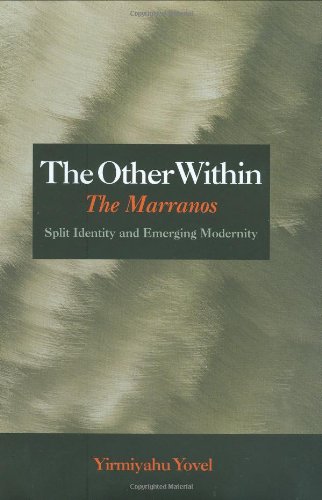
Not all these Conversos were crypto-Jews, that is, insincere Christians, but most remained proudly ethnic Jews, and continued to marry among themselves. Solomon Halevi, chief rabbi of Burgos, converted in 1390, took the name of Pablo de Santa Maria, became Bishop of Burgos in 1416, and was succeeded by his son Alonso Cartagena. Both father and son saw no contradiction between the Torah and the Gospel, and believed that Jews made better Christians, as being from the chosen people and of the race of the Messiah.[18]
A new situation was created after the Alhambra Decree (1492) that forced Spanish Jews to choose between conversion and expulsion. Four years later, those who had stayed loyal to their faith and migrated to Portugal were given the choice between conversion and death, with no possibility of leaving the country. Portugal now had a population of about 12 percent so-called New Christians, deeply resentful of Catholicism. They learned and perfected the art of leading a double life. When they were eventually allowed to leave the country and engage in international trade in 1507, they “soon began to rise to the forefront of international trade, virtually monopolizing the market for certain commodities, such as sugar, to participate to a lesser degree in trading spices, rare woods, tea, coffee, and the transportation of slaves.”[19] When in 1540, the new Portuguese king introduced the Inquisition following the Spanish model, tracking down Portuguese Judaizers all over Europe and even in the New World, Marranos became more intensely resentful of the Catholic faith they had to fake, and more secretive. They would play an important role in the Calvinist or Puritan movement which, after undermining Spanish domination on the Netherlands, conquered England and ultimately formed the religious bedrock of the United States.
Catholic monarchs are to blame for having drafted by force into Christendom an army of enemies that would largely contribute to the ruin of the Catholic empire. By and large, the Roman Church has done much to foster the Jewish culture of crypsis. However, segregation and forced conversions were not the only factor. Crypto-Jews could find justification in their Hebrew Bible, in which they read:
“Rebekah took her elder son Esau’s best clothes, which she had at home, and dressed her younger son Jacob in them. […] Jacob said to his father, ‘I am Esau your first-born’” (Genesis 27:15–19).
If Jacob cheated his brother Esau of his birthright by impersonating him, why would they not do the same (Jacob being, of course, Israel, and Esau or Edom being codenames for the Catholic Church among medieval Jews)? Crypto-Jews also found comfort and justification in the biblical figure of Esther, the clandestine Jewess who, in the Persian king’s bed, inclined him favorably toward her people. For generations, Spanish and Portuguese Marranos prayed to “saint Esther.”[20] This is significant because the legend of Esther is a cornerstone of Jewish culture: every year the Jews celebrate its happy ending (the massacre of 75,000 Persians by the Jews) by the feast of Purim.[21] Another factor to consider is the ritual prayer of Kol Nidre recited before Yom Kippur at least since the 12th century, by which Jews absolved themselves in advance of “all vows, obligations, oaths or anathemas, pledges of all names,” including, of course, baptism .
Marranos and their descendants had a deep and lasting influence in economic, cultural and political world history, and their culture of crypsis survived the Inquisition. A case in point is the family of Benjamin Disraeli, Queen Victoria’s prime minister from 1868 to 1869, and again from 1874 to 1880, who defined himself as “Anglican of Jewish race.”[22] His grandfather was born from Portuguese Marranos converted back to Judaism in Venice, and had moved to London in 1748. Benjamin’s father, Isaac D’Israeli was the author of a book on The Genius of Judaism, but had his whole family baptized when Benjamin was thirteen, because administrative careers were then closed to the Jews in England.
Benjamin Disraeli has been called the true inventor of British imperialism, for having Queen Victoria proclaimed Empress of India in 1876. He orchestrated the British takeover of the Suez Canal in 1875, thanks to funding from his friend Lionel Rothschild (an operation that also consolidated the Rothschilds’ control over the Bank of England). But Disraeli can also be considered a major forerunner of Zionism; well before Theodor Herzl, he tried to introduce the “restoration of Israel” into the Berlin Congress agenda, hoping to convince the Ottoman Sultan to concede Palestine as an autonomous province.
What was Disraeli’s motivation behind his British imperial foreign policy? Did he believe in Britain’s destiny to control the Middle East? Or did he see the British Empire as the tool for the fulfillment of Israel’s own destiny? In mooring the Suez Canal to British interests, did he just seek to outdo the French, or was he laying the foundation for the future alliance between Israel and the Anglo-American Empire? No one can answer these questions with certainty. But Disraeli’s contemporaries pondered them. William Gladstone, his longtime competitor for the prime ministry, accused him of “holding British foreign policy hostage to his Jewish sympathies.”[23] So we see that the neoconservatives’ loyalty to Israel, and their control of the Empire’s foreign policy, is not a new issue. The case of Disraeli highlights the legacy between pre-modern crypto-Judaism and modern crypto-Zionism.
The dialectic of nation and religion

From his Darwinian perspective, Kevin MacDonald sees crypto-Judaism as “an authentic case of crypsis quite analogous to cases of mimetic camouflage in the natural world.”[24] But Judaism itself, in its modern form, falls into the same category, according to MacDonald. In the 18th century, by claiming to be adepts of a religious confession, Jews gained full citizenship in European nations, while remaining ethnically endogamic and suspiciously uninterested in converting anyone. Gilad Atzmon points out that the Haskalah motto, “Be a Jew at home and a man in the street” is fundamentally dishonest:
“The Haskalah Jew is deceiving his or her God when at home, and misleading the goy once in the street. In fact, it is this duality of tribalism and universalism that is at the very heart of the collective secular Jewish identity. This duality has never been properly resolved.”[25]
Zionism was an attempt to resolve it. Moses Hess wrote in his influential book Rome and Jerusalem (1862):
“Those of our brethren who, for purposes of obtaining emancipation, endeavor to persuade themselves, as well as others, that modern Jews possess no trace of a national feeling, have really lost their heads.”
For him, a Jew is a Jew “by virtue of his racial origin, even though his ancestors may have become apostates.”[26] Addressing his fellow Jews, Hess defended the national character of Judaism and denounced the assimilationist Jew’s “beautiful phrases about humanity and enlightenment which he employs as a cloak to hide his treason.”[27]
In return, Reformed Judaism opposed the nationalist version of Jewishness which would become Zionism. On the occasion of their 1885 Pittsburgh Conference, American reformed rabbis issued the following statement:
“We consider ourselves no longer a nation, but a religion community, and therefore expect neither a return to Palestine, nor the restoration of a sacrificial worship under the Sons of Aaron, or of any of the laws concerning the Jewish State.”[28]
Yet Reformed Judaism promoted a messianic theory that continued to ascribe an exalted role to Israel as chosen people, nation or race. German-American rabbi Kaufmann Kohler, a star of the Pittsburgh Conference, argued in his Jewish Theology (1918) for the recycling of the messianic hope into “the belief that Israel, the suffering Messiah of the centuries, shall at the end of days become the triumphant Messiah of the nations.”
“Israel is the champion of the Lord, chosen to battle and suffer for the supreme values of mankind, for freedom and justice, truth and humanity; the man of woe and grief, whose blood is to fertilize the soil with the seeds of righteousness and love for mankind. […] Accordingly, modern Judaism proclaims more insistently than ever that the Jewish people is the Servant of the Lord, the suffering Messiah of the nations, who offered his life as an atoning sacrifice for humanity and furnished his blood as the cement with which to build the divine kingdom of truth and justice.”[29]
It is easy to recognize here an imitation of Christianity: the crucifixion of Christ (by the Jews, as Christians used to say) is turned into a symbol of the martyrdom of the Jews (by Christians). Interestingly, the theme of the “crucifixion of the Jews” was also widely used by secular Zionist Jews as a diplomatic argument.
But what is more important to understand is that Reformed Judaism rejected traditional nationalism (the quest for statehood) only to profess a superior, metaphysical kind of nationalism. In this way, Reformed Judaism and Zionism, while affirming their mutual incompatibility and competing for the hearts of Jews, dovetailed perfectly: Zionism played the rhetoric of European nationalist movements to claim “a nation like others” (for Israelis), while Reformed Judaism aimed at empowering a nation like no other and without borders (for Israelites). That explains why in 1976, American Reformed rabbis crafted a new resolution affirming: “The State of Israel and the Diaspora, in fruitful dialogue, can show how a People transcends nationalism while affirming it, thus establishing an example for humanity.”[30] In a marvelous example of Hegelian dialectical synthesis, both the religious and the national faces of Jewishness contributed to the end result: a nation with both a national territory and an international citizenry, exactly what Leo Strauss had in mind. Except for a few orthodox Jews, most Jews today see no contradiction between Judaism as a religion and Zionism as a nationalist project.
The question of whether such dialectical machinery was engineered by Yahweh or by B’nai B’rith is open to debate. But it can be seen as an inherent dynamic of Jewishness: the Jewish cognitive elites may find themselves divided on many issues, but since their choices are ultimately subordinated to the great metaphysical question, “Is it good for Jews?” there always comes a point when their oppositions are resolved in a way that reinforces their global position.

With “what is good for the Jews” in mind, contradictions are easily resolved. Jewish intellectuals, for example, can be ethnic nationalists in Israel, and pro-immigration multiculturalists everywhere else. A paragon of this contradiction was Israel Zangwill, the successful author of the play The Melting Pot (1908), whose title has become a metaphor for American society, and whose Jewish hero makes himself the bard of assimilation by mixed marriages: “America is God’s Crucible, the great Melting-Pot where all the races of Europe are melting and reforming.” The paradox is that when he was writing this, Zangwill was a leading figure of Zionism, that is, a movement affirming the impossibility of Jews living among Gentiles, and demanding that they be ethnically separated. (Zangwill is the author of another famous formula: “Palestine is a land without people for a people without land.”)
Although it appears to be contradictory for non-Jews, this dual standard is not necessarily so from the point of view of Jewish intellectuals. They may sincerely believe in their universalistic message addressed to the Goyim, while simultaneously believing sincerely that Jews should remain a separate people. The implicit logic is that it is good that Jews remain Jews in order to teach the rest of mankind to be universal, tolerant, anti-racists, immigrationnists, and caring for minorities (specially Jews). This logic falls under the “mission theory”, the secular version of the “messianic nation” theory: Jews, who have invented monotheism, the Ten Commandments and so on, have a moral obligation to keep educating the rest of humankind. What the “mission” entails is open to reversible interpretations. Rabbi Daniel Gordis, in Does the World Need Jews? claims that “Jews need to be different in order that they might play a quasi-subversive role in society [. . .] the goal is to be a contributing and respectful ‘thorn in the side’ of society.”[31] That naturally tends to upset the Goyim, but it is for their good. It is to free them from their “false gods” that Jews are “a corrosive force”, also insists Douglas Rushkoff, author of Nothing Sacred: The Truth About Judaism.
Preaching universalism to the Goyim in the street while emphasizing ethnic nationalism at home is the great deception. It is the essence of crypto-Judaism and of its modern form, crypto-Zionism. It is so deeply ingrained that it has become a kind of collective instinct among many Jews. It can be observed in many situations. The following remark by historian Daniel Lindenberg illustrates that Jewish internationalists’ relation to Israel in the 20th century strongly resembled the Marranos’ relation to Judaism in pre-modern times:
“Anyone who has known Communist Jews, ex-Kominternists, or even some prominent representatives of the 1968 generation will know what frustrated crypto-Jewishness means: Here are men and women who, in principle, according to the ‘internationalist’ dogma, have stifled in themselves all traces of ‘particularism’ and ‘petty-bourgeois Jewish chauvinism,’ who are nauseated by Zionism, support Arab nationalism and the great Soviet Union—yet who secretly rejoice in Israel’s military victories, tell anti-Soviet jokes, and weep while listening to a Yiddish song. This goes on until the day when, like a Leopold Trepper, they can bring out their repressed Jewishness, sometimes becoming, like the Marranos of the past, the most intransigent of neophytes.”[32]
Zion and the New World Order
If Jews can be alternatively or even simultaneously nationalists (Zionists) and internationalists (communists, globalists, etc.), it is, in the last analysis, because this duality is inherent to the paradoxical nature of Israel. Let us not forget that until the foundation of the “Jewish state”, “Israel” was a common designation for the international Jewish community, for example when on March 24, 1933, the BritishDaily Express printed on its front-page: “The whole of Israel throughout the world is united in declaring an economic and financial war on Germany.”[33] Until 1947, most American and European Jews were satisfied of being “Israelites”, members of a worldwide Israel. They saw the advantage of being a nation dispersed among nations. International Jewish organizations such as B’nai B’rith (Hebrew for “Children of the Covenant”) founded in New York in 1843, or the Alliance Israélite Universelle, founded in Paris in 1860, had no claim on Palestine.

Even after 1947, most American Jews remained ambivalent about the new State of Israel, knowing perfectly well that to support it would make them vulnerable to the accusation of dual loyalty. It was only after the Six-Day War that American Jews began to support Israel more actively and openly. There were two reasons for this. First, Zionist control of the press had become such that American public opinion was easily persuaded that Israel had been the victim and not the aggressor in the war that led Israel to triple its territory. Secondly, after 1967, the crushing deployment of Israeli power against Egypt, a nation supported diplomatically by the USSR, enabled the Johnson administration to elevate Israel to a strategic asset in the Cold War. Norman Finkelstein explains:
“For American Jewish elites, Israel’s subordination to US power was a windfall. Jews now stood on the front lines defending America—indeed, ‘Western civilization’—against the retrograde Arab hordes. Whereas before 1967 Israel conjured the bogey of dual loyalty, it now connoted super-loyalty. […] After the 1967 war, Israel’s military élan could be celebrated because its guns pointed in the right direction—against America’s enemies. Its martial prowess might even facilitate entry into the inner sanctums of American power.”[34]
Israeli leaders, for their part, stopped blaming American Jews for not settling in Israel, and recognized the legitimacy of serving Israel while residing in the United States. In very revealing terms, Benjamin Ginsberg writes that already in the 1950s, “an accommodation was reached between the Jewish state in Israel and the Jewish state in America”; but it was after 1967 that the compromise became a consensus, as anti-Zionist Jews were marginalized and silenced.[35] Thus was born a new Israel, whose capital was no longer only Tel Aviv but also New York; a transatlantic Israel, a nation without borders, delocalized. It was not really a novelty, but rather a new balance between two inseparable realities: the international Diaspora of Israelites, and the national State of Israelis.
Thanks to this powerful diaspora of virtual Israelis now entrenched in all levels of power in the US, France and many other nations, Israel is a very special nation indeed. And everyone can see that it has no intention of being an ordinary nation. Israel is destined to be an Empire. If Zionism is defined as the movement for the foundation of a Jewish State in Palestine, then what we see at work today may be called meta-Zionism, or super-Zionism. But there is no real need for such a new term, for Zionism, in fact, had always been about a new world order, under the mask of “nationalism”.
David Ben-Gurion, the “father of the nation”, was a firm believer in the mission theory, declaring: “I believe in our moral and intellectual superiority, in our capacity to serve as a model for the redemption of the human race.”[36] In a statement published in the magazine Look on January 16, 1962, he predicted for the next 25 years:
“All armies will be abolished, and there will be no more wars. In Jerusalem, the United Nations (a truly United Nations) will build a Shrine of the Prophets to serve the federated union of all continents; this will be the seat of the Supreme Court of Mankind, to settle all controversies among the federated continents, as prophesied by Isaiah.”[37]
That vision was passed on to the next generation. In October 2003, the highly symbolic King David Hotel hosted a “Jerusalem Summit”, whose participants comprised three acting Israeli ministers, including Benjamin Netanyahu, and Richard Perle as guest of honor. They signed a declaration that recognized Jerusalem’s “special authority to become a center of world’s unity,” and professed:
“We believe that one of the objectives of Israel’s divinely-inspired rebirth is to make it the center of the new unity of the nations, which will lead to an era of peace and prosperity, foretold by the Prophets.”[38]
Zionists and the Bible
Both Ben-Gurion’s prophecy and the Jerusalem Declaration highlight the fact that Zionism is an international project based on the Bible. That Zionism is biblical doesn’t mean it is religious; to Zionists, the Bible is both a “national narrative” and a geopolitical program rather than a religious book (there is actually no word for “religion” in ancient Hebrew). Ben-Gurion was not religious; he never went to the synagogue and ate pork for breakfast. Yet he was intensely biblical. Dan Kurzman, who calls him “the personification of the Zionist dream,” titles each chapter of his biography (Ben-Gurion, Prophet of Fire, 1983) with a Bible quote. The preface begins like this:
“The life of David Ben-Gurion is more than the story of an extraordinary man. It is the story of a biblical prophecy, an eternal dream. […] Ben-Gurion was, in a modern sense, Moses, Joshua, Isaiah, a messiah who felt he was destined to create an exemplary Jewish state, a ‘light unto the nations’ that would help to redeem all mankind.”
For Ben-Gurion, writes Kurzman, the rebirth of Israel in 1948 “paralleled the Exodus from Egypt, the conquest of the land by Joshua, the Maccabean revolt.” Ben-Gurion himself emphasized: “There can be no worthwhile political or military education about Israel without profound knowledge of the Bible.”[39] Ten days after declaring Israel’s independence, he wrote in his diary : “We will break Transjordan [Jordan], bomb Amman and destroy its army, and then Syria falls, and if Egypt will still continue to fight—we will bombard Port Said, Alexandria and Cairo.” Then he adds: “This will be in revenge for what they (the Egyptians, the Aramis and Assyrians) did to our forefathers during biblical times.”[40] Can you be more biblical than that ? Ben-Gurion was in no way a special case. His infatuation with the Bible was shared by almost every Zionist leader of his generation and the next. Moshe Dayan, the military hero of the Six-Day War, wrote a book entitled Living with the Bible (1978) in which he biblically justified Israel’s annexation of Arab territories. Naftali Bennet, Israeli minister of Education, has also recently justified the annexation of the West Bank by the Bible.

Christian will say that Zionists don’t read their Bible correctly. Obviously, they don’t read it with the pink Christian glasses. In Isaiah, for example, Christians find hope that, one day, people “will hammer their swords into plowshares and their spears into sickles” (Isaiah 2:4). But Zionists correctly start with the previous verses, which describe these messianic times as a Pax Judaica, when “all the nations” will pay tribute “to the mountain of Yahweh, to the house of the god of Jacob,” when “the Law will issue from Zion and the word of Yahweh from Jerusalem,” so that Yahweh will “judge between the nations and arbitrate between many peoples.” Further down in the same book, they read:
“The riches of the sea will flow to you, the wealth of the nations come to you” (60:5); “For the nation and kingdom that will not serve you will perish, and the nations will be utterly destroyed” (60:12); “You will suck the milk of nations, you will suck the wealth of kings” (60:16); “You will feed on the wealth of nations, you will supplant them in their glory” (61:5-6);
Zionism cannot be a nationalist movement like other, because it resonates with the destiny of Israel as outlined in the Bible: “Yahweh your God will raise you higher than every other nation in the world” (Deuteronomy 28:1). Only by taking into account the biblical roots of Zionism can one understand that Zionism has always carried within it a hidden imperialist agenda. It may be true that Theodor Herzl and Max Nordau sincerely wished Israel to be “a nation like others,” as Gilad Atzmon explains.[41] But still, when they called their movement “Zionism”, they used Jerusalem’s biblical name borrowed from the most imperialistic prophecies, and most notably Isaiah 2:3 quoted above.
Biblical prophecies outline Israel’s ultimate destiny, or meta-Zionism, whereas the historical books, and particularly the Book of Joshua, set the pattern for the first stage, the conquest of Palestine, or Zionism. As wrote Avigail Abarbanel in “Why I left the Cult,” the Zionist conquerors of Palestine “have been following quite closely the biblical dictate to Joshua to just walk in and take everything. […] For a supposedly non-religious movement it’s extraordinary how closely Zionism […] has followed the Bible.”[42] In the same mood, Kim Chernin writes:
“I can’t count the number of times I read the story of Joshua as a tale of our people coming into their rightful possession of their promised land without stopping to say to myself, ‘but this is a history of rape, plunder, slaughter, invasion, and destruction of other peoples.’”[43]
A “history of genocide” would not be exaggerated, if we consider the treatment reserved to Canaanites: In Jericho, “They enforced the curse of destruction on everyone in the city: men and women, young and old, including the oxen, the sheep and the donkeys, slaughtering them all” (Joshua 6:21). The city of Ai met the same fate. Its inhabitants were all slaughtered, twelve thousand of them, “until not one was left alive and none to flee. […] When Israel had finished killing all the inhabitants of Ai in the open ground, and in the desert where they had pursued them, and when every single one had fallen to the sword, all Israel returned to Ai and slaughtered its remaining population” (8:22–25). Women were not spared. “For booty, Israel took only the cattle and the spoils of this town” (8:27). Then came to turn of the cities of Makkedah, Libnah, Lachish, Eglon, Hebron, Debir, and Hazor. In the whole land, Joshua “left not one survivor and put every living thing under the curse of destruction, as Yahweh, god of Israel, had commanded” (10:40).
It certainly helps to understand the Israeli treatment of the Palestinians to know that the Book of Joshua is considered a glorious chapter of Israel’s national narrative. And when Israeli leaders claim that their vision of the global future is based on the Hebrew Bible, we should take them seriously and study the Bible. It is helpful, for example, to be aware that Yahweh has designated to Israel “seven nations greater and mightier than you,” that “you must utterly destroy,” and “show no mercy to them.” As for their kings, “you shall make their name perish from under heaven” (Deuteronomy 7:1-2, 24). The destruction of the “Seven Nations,” also mentioned in Joshua 24:11, is considered a mitzvah in rabbinic Judaism, and by the great Maimonides in his Book of Commandments,[44] and it has remained a popular motif in Jewish culture. Knowing this will help to understand the neocon agenda for World War IV (as Norman Podhoretz names the current global conflict).[45] General Wesley Clark, former Supreme Commander for NATO in Europe (he led the NATO agression against Serbia twenty years ago), wrote, and repeated in numerous occasions, that one month after September 11, 2001, a Pentagon general showed him a memo “that describes how we’re gonna take out seven countries in five years, starting with Iraq, and then Syria, Lebanon, Libya, Somalia and Sudan and finishing off with Iran.”[46] Wesley Clark has managed to pass as a whistleblower, but I believe he belongs to what Gilad Atzmon sees as the Jewish controlled opposition, together with Amy Goodman of Democracy Now who interviewed him.[47] Only in 1999 has he revealed being the son of Benjamin Jacob Kanne and the proud descendant of a lineage of Kohen rabbis. It is hard to believe that he has never heard about the Bible’s “seven nations”. Is Clark a crypto-Zionist trying to write history in biblical terms, while blaming these wars on WASP Pentagon warmongers? Interestingly, in his September 20, 2001 speech, President Bush also cited seven “rogue states” for their support of global terrorism, but in his list, Cuba and North Korea replaced Lebanon and Somalia. It is because part of Bush’s entourage refused to include Lebanon and Somalia, while his neocon handlers insisted on keeping the number seven for its symbolic value? Whatever the explanation, I suspect that the importance of targeting exactly “seven nations” after 9/11 stems from the same biblical obsession as the need to have ten Nazis hanged on Purim day 1946 to match the ten sons of Haman hanged in the Book of Esther. Just like Rabbi Bernhard Rosenberg can now marvel at how prophetic the Book of Esther is,[48] the idea is to “realize,” a few decades from now, that World War IV fulfilled Deuteronomy 7: the destruction of Israel’s seven enemy nations. Christian Zionists will be in extasy and praise “the Lord” (as their Bible translates YHWH). Of course, fulfilling prophecies does not always come easy: Isaiah 17:1, “Behold, Damascus will soon cease to be a city, it will become a heap of ruins,” is not quite done, yet.
The Solomon hoax
I believe that Gilad Atzmon is making a very important point when emphasizing:
“Israel defines itself as the Jewish state. In order to grasp Israel, its politics, its policies and the intrusive nature of its lobby, we must understand the nature of Jewishness.”
And I believe that Jewishness is, at the core, the ideology of the Tanakh. There was no Jewishness before the Tanakh, and the Tanakh is the single ultimate root connecting all expressions of Jewishness, whether religious or secular—for what that distinction is worth. Jewishness would simply wither without the Tanakh.
Zionism is an expression of Jewishness. As we have seen, it is inherently imperialistic because it is biblical. I will now argue that it is also inherently deceptive because it is biblical. There are two aspects to the deceptive nature of the Tanakh: historical and metaphysical. To understand them, we need to know the context of its writing. The greatest part of the Tanakh, including the historical books, was edited during the exilic period, and reached its near-final form after Babylon had fallen under Persian rule in 539 BCE. That thesis, first put forward by Baruch Spinoza in 1670,[49] has always met with fierce opposition from the Christian world, but it was accepted by the great British historian of civilizations Arnold J. Toynbee,[50] and it is now getting the high ground.[51] The Judean exiles, after having helped the Persians conquer Babylon, were rewarded by high offices at the Persian court, and obtained the right to return to Jerusalem and set up a government subject to Persia. The manner by which these Judeo-Babylonian Levites maneuvered the Persians’ imperial policy in support of their theocratic project for Palestine is unknown, but we can imagine it similar to the way the Zionists have hijacked the Anglo-American empire’s foreign policy in recent times; the edict of Cyrus the Great presented at the beginning of the Book of Ezra is comparable to the Balfour Declaration. In 458 BCE, eighty years after the return of the first exiles, Ezra, proud descendant of a line of Aaronite priests, went from Babylon to Jerusalem, mandated by the king of Persia and accompanied by some 1,500 followers. He was soon joined by Nehemiah, a Persian court official of Judean origin. As “Secretary of the Law,” Ezra carried with him the newly redacted Torah, and Spinoza plausibly suggested that he was the head of the scribal school that had compiled and edited most of the Tanakh.

The history of Israel and Judea that we have today was written as justification for that proto-Zionist enterprise, which implied the usurpation of the name and heritage of the ancient kingdom of Israel by the Judeans. Of course, not everything in the historical books is pure invention: ancient materials were used, but the main narrative that aggregates them is built on a post-exilic ideological construct. The central piece of that narrative is the glorious kingdom of Solomon, reaching from the Euphrates to the Nile (1Kings 5:1), with its magnificent temple and its lavish royal palace in Jerusalem (described in detail in 1Kings 5-8). Solomon had “seven hundred wives of royal rank and three hundred concubines” (11:3) and “received gifts from all the kings in the world, who had heard of his wisdom” (5:14). We know today that Solomon’s kingdom is a complete fabrication, a mythical past projected as the mirror image of a desired future, a fictitious justification for the prophecy of its “restoration”. Even the idea that Jerusalem, located in Judea, was once the capital of Israel is blatantly false: Israel never had any other capital than Samaria. Twentieth-century archeology has definitively exposed the fallacy: there is no trace whatsoever of Solomon and his “united kingdom”.[52]
The scam is quite evident from the way the authors of the Books of Kings, aware of the absolute baselessness of their story, back it with the grotesque testimony of a totally spurious Queen of Sheba:
“The report I heard in my own country about your wisdom in handling your affairs was true then! Until I came and saw for myself, I did not believe the reports, but clearly I was told less than half: for wisdom and prosperity, you surpass what was reported to me. How fortunate your wives are! How fortunate these courtiers of yours, continually in attendance on you and listening to your wisdom! Blessed be Yahweh your God who has shown you his favour by setting you on the throne of Israel! Because of Yahweh’s everlasting love for Israel, he has made you king to administer law and justice.” (1 Kings 10:6-9)[53]
When Ben-Gurion declared before the Knesset three days after invading the Sinai in 1956, that what was at stake was “the restoration of the kingdom of David and Solomon,”[54] and when Israeli leaders continue to dream of a “Greater Israel” of biblical proportions, they are simply perpetuating a two-thousand-year-old deception—self-deception perhaps, but deception all the same.
Deeper than the historical deception, at the very core of the Bible, lies a more essential metaphysical deception which goes a long way towards explaining the ambivalence of tribalism and universalism so typical of Jewishness. Biblical historian Philip Davies wrote that “the ideological structure of the biblical literature can only be explained in the last analysis as a product of the Persian period,”[55] and the central idea of that “ideological structure” is biblical monotheism. In the pre-exilic strata of the Bible, Yahweh is a national god among others: “For all peoples go forward, each in the name of its god, while we go forward in the name of Yahweh our god for ever and ever,” says pre-exilic prophet Micah (4:5). What sets Yahweh apart from other national gods is his jealousy, which supposes the existence of other gods: “You shall have no other gods to rival me” (Exodus 20:3). Only in the Persian period does Yahweh really become the only existing God, and, by logical consequence, the creator of the Universe—Genesis 1 being demonstrably taken from Mesopotamian myths.
That transformation of national Yahweh into the “God of heaven and earth” is a case of crypsis, an imitation of Persian religion, for the purpose of political and cultural ascendency. The Persians were predominantly monotheistic under the Achaemenids, worshipers of the Supreme God Ahura Mazda, whose representations and invocations can be seen on royal inscriptions. Herodotus—who, by the way, travelled through Syria-Palestine around 450 BCE without hearing about Jews—wrote about the Persians’ customs:
“they have no images of the gods, no temples nor altars, and consider the use of them a sign of folly. [….] Their wont, however, is to ascend the summits of the loftiest mountains, and there to offer sacrifice to Zeus, which is the name they give to the whole circuit of the firmament.” (Histories, I.131)
Persian monotheism was remarkably tolerant of other cults. In contrast, Judean monotheism is exclusivist because, although Yahweh now claims to be the universal God, he remains the ethnocentric, jealous god of Israel. And so Persian influence was not the only factor in the development of biblical monotheism, that is, the claim that “the god of Israel” is the One and Only God: Yahweh’s sociopathic jealousy, his murderous hatred of all other gods and goddesses, was an important ingredient from pre-exilic times: being the only god worthy of worship is tantamount to being the only god, and therefore God. In 1Kings 18, we see Yahweh compete with the great Syrian Baal Shamem (“Lord of Heaven”) for the title of True God, by means of a holocaust contest ending with the slaughter of four hundred prophets of Baal. Later on we read of the Judean general Jehu who, having overthrown and slaughtered Israel’s dynasty of King Omri, summoned all the priests of Baal for “a great sacrifice to Baal,” and, as sacrifice, massacred them all. “Thus Jehu rid Israel of Baal” (2Kings 10,18-28). This informs us on how Yahweh supposedly became Supreme God instead of Baal: by the physical elimination of all the priests of Baal, that is, exactly the same way that Jehu became king of Israel by exterminating the family of the legitimate king, as well as “all his leading men, his close friends, his priests; he did not leave a single one alive” (2Kings 10:11).
Yet these legendary stories have come to us in a post-exilic redaction, and although they may reflect an earlier competition between Yahweh and Baal, the metaphysical claim that Yahweh is the supreme God, the Creator of Heaven and Earth, only became an explicit creed and a cornerstone of Judaism from the Persian period. It was a means of assimilation-dissimulation into the Persian commonwealth, comparable to the way Reformed Judaism mimicked Christianity in the 19th century.
The Book of Ezra and the prostitute of Jericho
The process of how Yahweh was transformed from national to universal god, while remaining intensely chauvinistic, can actually be documented from the Book of Ezra. It contains extracts from several edicts attributed to succeeding Persian kings. All are fake, but their content is indicative of the politico-religious strategy deployed by the Judean exiles for their proto-Zionist lobbying. In the first edict, Cyrus the Great declares that “Yahweh, the God of Heaven, has given me all the kingdoms of the earth and has appointed me to build him a Temple in Jerusalem,” then goes on to allow “his [Yahweh’s] people to “go up to Jerusalem, in Judah, and build the Temple of Yahweh, the god of Israel, who is the god in Jerusalem” (Ezra 1:2–3). We understand that both phrases refer to the same entity, but the duality is significant. We find the same paradoxical designation of Yahweh as both “God of Heaven” and “god of Israel in Jerusalem” in the Persian edict authorizing the second wave of return. It is now King Artaxerxes who asks “the priest Ezra, Secretary of the Law of the God of Heaven,” to offer a gigantic holocaust to “the god of Israel who resides in Jerusalem” (7:12-15). We later find twice the same expression “God of Heaven” (Elah Shemaiya) interspersed with seven references to “your god,” that is, “the god of Israel” (keep in mind that capitalization is irrelevant here, being a convention of modern translators). “God of Heaven” appears one more time in the book of Ezra, and it is, again, in an edict signed by the Persian king: Darius confirms Cyrus’s edict and recommends that the Israelites “offer sacrifices acceptable to the God of Heaven and pray for the life of the king and his sons” (6:10). Everywhere else the book of Ezra only refers to the “god of Israel” (four times), “Yahweh, the god of your fathers” (once), and “our god” (ten times). In other words, according to the author of the book of Ezra, only the kings of Persia imagine that Yahweh is “the God of Heaven”—a common title of the universal Ahura Mazda—while for the Jews, Yahweh is merely their god, the “god of Israel,” the god of their fathers, in short, a national god. Indeed, imperial authorities are told that the Jerusalem Temple is dedicated to the God of Heaven, although the idea seems irrelevant to the Judeans themselves: when the Judeans are challenged the right to (re)build their temple by the local Persian governor, they tell him: “We are the servants of the God of Heaven and Earth” (5:11) and refer to Cyrus’s edict. And when Nehemiah wants to convince the Persian king let him go to Judea to oversee the rebuilding of Jerusalem, he offers a prayer “to the God of Heaven” (Nehemiah 2:4); but once in Jerusalem, he asks his fellow Jews to swear allegiance to “Yahweh our god” (10:30).
This unmistakable pattern in the books of Ezra and Nehemiah may be taken as a clue of the deepest secret of Judaism, and a key to understanding the real nature of “Jewish universalism”: for the Jews, Yahweh is the god of the Jews, whereas Gentiles must be told that he is the supreme and only God. “In the heart of any pious Jew, God is a Jew,” writes Maurice Samuel in You Gentiles (1924), while to Gentiles, Yahweh must be presented as the universal God who happens to prefer Jews.[56] The pattern is repeated in the book of Daniel when Nebuchadnezzar, impressed by Daniel’s oracle, prostrates himself and exclaims: “Your god is indeed the God of gods, the Master of kings” (Daniel 2:47).

The hypothesis that the dual nature of Yahweh (god of Israel for the Jews, God of the Universe for Gentiles) was intentionally encrypted into the Hebrew Bible becomes more plausible when we find the same pattern in the Book of Joshua. The book was probably written before the Exile, possibly under king Josiah (639-609 BCE). Its original author never refers to Yahweh simply as “God,” and never implies that he is anything but “the god of Israel” (9:18, 13:14, 13:33, 14:14, 22:16). Even Yahweh calls himself “the god of Israel” (7:13). When Joshua speaks to the Israelites, he speaks of “Yahweh your god” (1:11, 1:12, 1:15, 3:3, 3:9, 4:5, 4:23-24, 8:7, 22:3-4, 22:5, 23:3,5,8,11, 24:2). The Israelites collectively refer to “Yahweh our god” (22:19), or individually as “Yahweh my god” (14:8). Israel’s enemies speak to Joshua about “Yahweh your god” (9:9), and he tells them about “Yahweh my god” (9:23). Yahweh is once called “lord of the whole earth” by Joshua (3:13), and once “the god of gods” by enthusiastic Israelites (22:22), but none of this can be considered to contain any explicit theological claim that Yahweh is the Creator: it is more like the Persian king calling himself king of kings and ruler of the world. Neither can the mention of an altar built by the Israelites as “a witness between us that Yahweh is god” (22:34) be taken to mean anything more than “Yahweh is god between us.” If the Yahwist scribe of the Book of Joshua had believed Yahweh to be the universal God, he would have written of whole cities being converted rather than exterminated for the glory of Yahweh.
The only explicit profession of faith that Yahweh is the supreme God, in the whole Book of Joshua, is coming from a foreigner, just like in the books of Ezra and Nehemiah. Not a king, this time, but a prostitute. Rahab is a prostitute in Jericho, who infiltrates the invading Israelites into the city. As justification for betraying her own people, she tells the Israelites that “Yahweh your god is God both in Heaven above and on Earth beneath” (2:11), something that neither the narrator, nor Yahweh, nor any Israelite in the book ever claims. Rahab’s profession of faith is likely to be a post-exilic addition to the book, for it actually conflicts with her more prosaic motivation:
“we are afraid of you and everyone living in this country has been seized with terror at your approach. […] give me a sure sign of this: that you will spare the lives of my father and mother, my brothers and sisters and all who belong to them, and will preserve us from death.” (2:9-12).
In the final redaction, the pattern is the same as in the Book of Ezra, and reveals the secret of post-exilic Judaism: To the Jews, Yahweh is their national god, but it is good for the Jews that Gentiles (whether kings or prostitutes) regard Yahweh as the “God of Heaven”. It has worked wonderfully: Christians today believe that the God of humankind decided to manifest himself as the jealous “god of Israel” from the time of Moses, whereas the real historical process is the reverse: it is the tribal “god of Israel” who impersonated the God of humankind at the time of Ezra—while continuing to prefer Jews.
Worshipping a national god with imperialistic ambitions, while pretending to the Gentiles that they are worshipping the One True God, is manufacturing a catastrophic misunderstanding. A public scandal emerged in 167 CE, when the Hellenistic emperor Antiochos IV dedicated the temple in Jerusalem to Zeus Olympios, the Greek name of the supreme God. He had been led to understand that Yahweh and Zeus were two names for the same cosmic God, the Heavenly Father of all mankind. But the Jewish Maccabees who led the rebellion knew better: Yahweh may be the Supreme God, but only Jews are intimate with Him, and any way the Pagans worship Him is an abomination. Moreover, although the Israelites claimed that their Temple was dedicated to the God of all mankind, they also firmly believed that any non-Jew entering it should be put to death. This fact alone betrays the true nature of Hebrew monotheism: it was a deception from the beginning, the ultimate metaphysical crypsis. Only when that biblical hoax is exposed to the world will Zion start to lose its symbolic power. For it is the original source of the psychopathic bond by which Israel controls the world.
Notes
[1] Andrew Cockburn, Rumsfeld: His Rise, His fall, and Catastrophic Legacy, Scribner, 2011, p. 219. Cockburn claims to have heard this repeated by “friends of the family.”
[2] Leo Strauss, “Why we Remain Jews”, quoted in Shadia Drury, Leo Strauss and the American Right, St. Martin’s Press, 1999 (on archive.org), p. 31-43.
[3] Kevin MacDonald, Cultural Insurrections: Essays on Western Civilizations, Jewish Influence, and Anti-Semitism, The Occidental Press, 2007, p. 122.
[4] Kevin McDonald, Cultural Insurrection, op. cit., p. 66.
[5] Benjamin Balint, Running Commentary: The Contentious Magazine That Transformed the Jewish Left into the Neoconservative Right, Public Affairs, 2010.
[6] Congress Bi-Weekly, quoted by Philip Weiss, “30 Years Ago, Neocons Were More Candid About Their Israel-Centered Views,” Mondoweiss.net, May 23, 2007: mondoweiss.net/2007/05/30_years_ago_ne.html
[7]http://www.informationclearinghouse.info/pdf/RebuildingAmericasDefenses.pdf
[8] Elliott Abrams, Faith or Fear: How Jews Can Survive in a Christian America, Simon & Schuster, 1997, p. 181.
[9] Patrick J. Buchanan, “Whose War? A neoconservative clique seeks to ensnare our country in a series of wars that are not in America’s interest,” The American Conservative, March 24, 2003, www.theamericanconservative.com/articles/whose-war/
[10] Stephen Sniegoski, The Transparent Cabal: The Neoconservative Agenda, War in the Middle East, and the National Interest of Israel, Enigma Edition, 2008, p. 156.
[11] http://www.pbs.org/now/politics/wilkerson.html
[12] Stephen Sniegoski, The Transparent Cabal, op. cit., p. 120.
[13] April 11, 2002, quoted in Justin Raimondo, The Terror Enigma: 9/11 and the Israeli Connection, iUniverse, 2003, p. 19.
[14] April 26, 2013, on MSNBC, watch on .
[15] Noted by Inter-Press Service on March 29, 2004, under the title “U.S.: Iraq war is to protect Israel, says 9/11 panel chief,” and repeated by United Press International the next day, on www.upi.com.
[16] Norman Podhoretz, Breaking Ranks: A Political Memoir, Harper & Row , 1979, p. 335.
[17] Translated from the French edition, Yirmiyahu Yovel, L’Aventure marrane. Judaïsme et modernité, Seuil, 2011, pp. 119-120, 149–151.
[18] Yirmiyahu Yovel, L’Aventure marrane, op. cit., pp. 96–98, 141–143; Nathan Wachtel, Entre Moïse et Jésus. Études marranes (XVe-XIXe siècle), CNRS éditions, 2013, pp. 54–65.
[19] Yirmiyahu Yovel, L’Aventure marrane, op. cit., pp. 483, 347.
[20] Yirmiyahu Yovel, L’Aventure marrane, op. cit., pp. 149–151.
[21] Elliott Horowitz, Reckless Rites: Purim and the Legacy of Jewish Violence, Princeton University Press, 2006.
[22] Hannah Arendt calls him a “race fanatic” in The Origins of Totalitarianism, vol. 1: Antisemitism, Meridian Books, 1958, pp. 309–310.
[23] Stanley Weintraub, Disraeli: A Biography, Hamish Hamilton, 1993, p. 579.
[24] Kevin MacDonald, Separation and Its Discontents: Toward an Evolutionary Theory of Anti-Semitism, Praeger, 1998, kindle 2013, k. 5876–82.
[25] Gilad Atzmon, The Wandering Who? A Study of Jewish Identity Politics, Zero Books, 2011, pp. 55–56.
[26] Moses Hess, Rome and Jerusalem: A Study in Jewish Nationalism, 1918 (on archive.org), pp. 71, 27.
[27] Moses Hess, Rome and Jerusalem, op. cit., p. 74.
[28] Quoted in Alfred Lilienthal, What Price Israel? (1953), 50th Anniversary Edition, Infinity Publishing, 2003, p. 14.
[29] Kaufmann Kohler, Jewish Theology, Systematically and Historically Considered, Macmillan, 1918 (on www.gutenberg.org), pp. 290, 378–380.
[30] Quoted in Kevin MacDonald, Separation and Its Discontents, op. cit., k. 5463–68.
[31] Daniel Gordis, Does the World Need Jews? Rethinking Chosenness and American Jewish Identity, Scribner, 1997, p. 177.
[32] Daniel Lindenberg, Figures d’Israël. L’identité juive entre marranisme et sionisme (1649–1998), Fayard, 2014, p. 10.
[33] Alison Weir, Against Our Better Judgment: The Hidden History of How the U.S. Was Used to Create Israel, 2014, k. 3280–94.
[34] Norman Finkelstein, The Holocaust Industry: Reflections on the Exploitation of Jewish Suffering, Verso, 2014, p. 6.
[35] Benjamin Ginsberg, Jews in American Politics: Essays, dir. Sandy Maisel, Rowman & Littlefield, 2004, p. 22.
[36] Arthur Hertzberg, The Zionist State, Jewish Publication Society, 1997, p. 94.
[37] David Ben-Gurion and Amram Duchovny, David Ben-Gurion, In His Own Words, Fleet Press Corp., 1969, p. 116
[38] Official website: www.jerusalemsummit.org/eng/declaration.php.
[39] Dan Kurzman, Ben-Gurion, Prophet of Fire, Touchstone, 1983, pp. 17–18, 22, 26–28.
[40] Ilan Pappe, The Ethnic Cleansing of Palestine, Oneworld Publications, 2007, p. 144.
[41] Gilad Atzmon, Being in Time: A Post-Political Manifesto, Skyscraper, 2017, pp. 66-67.
[42] Avigail Abarbanel, “Why I left the Cult,” October 8, 2016, on mondoweiss.net
[43] Kim Chernin, “The Seven Pillars of Jewish Denial.” Tikkun, Sept./Oct. 2002, quoted in MacDonald, Cultural Insurrections, op. cit., pp. 27-28.
[44]http://www.chabad.org/library/article_cdo/aid/961561/jewish/Positive-Commandment-187.htm
[45] Norman Podhoretz, World War IV: The Long Struggle Against Islamofascism, Vintage Books, 2008.
[46] Wesley Clark, Winning Modern Wars, Public Affairs, 2003, p. 130.
[47] Gilad Atzmon, Being in Time: A Post-Political Manifesto, Skyscraper, 2017, p. 187-209.
[48] Another example: Bernard Benyamin, Le Code d’Esther. Si tout était écrit…, First Editions, 2012.
[49] Benedict de Spinoza, Theological-political treatise, chapter 8, §11, Cambridge UP, 2007, pp. 126-128.
[50] Arnold Toynbee, A Study of History, volume XII, Reconsiderations, Oxford University Press, 1961, p. 486, quoted on http://mailstar.net/toynbee.html
[51] Thomas Romer, The Invention of God, Harvard University Press, 2016.
[52] Read for example Israel Finkelstein and Neil Adher Silberman, David and Solomon: In Search of the Bible’s Sacred Kings and the Roots of the Western Tradition, S&S International, 2007.
[53] All Bible quotes are from the Catholic New Jerusalem Bible, which has the advantage of not altering YHWH into “the Lord,” as most other English translations have done for unscholarly reasons.
[54] Israel Shahak, Jewish History, Jewish Religion: The Weight of Three Thousand Years, Pluto Press, 1994, p. 10 .
[55] Philip Davies, In Search of “Ancient Israel”: A Study in Biblical Origins, Journal of the Study of the Old Testament, 1992, p. 94.
[56] Maurice Samuel, You Gentiles, New York, 1924 (on archive.org), pp. 74–75.


